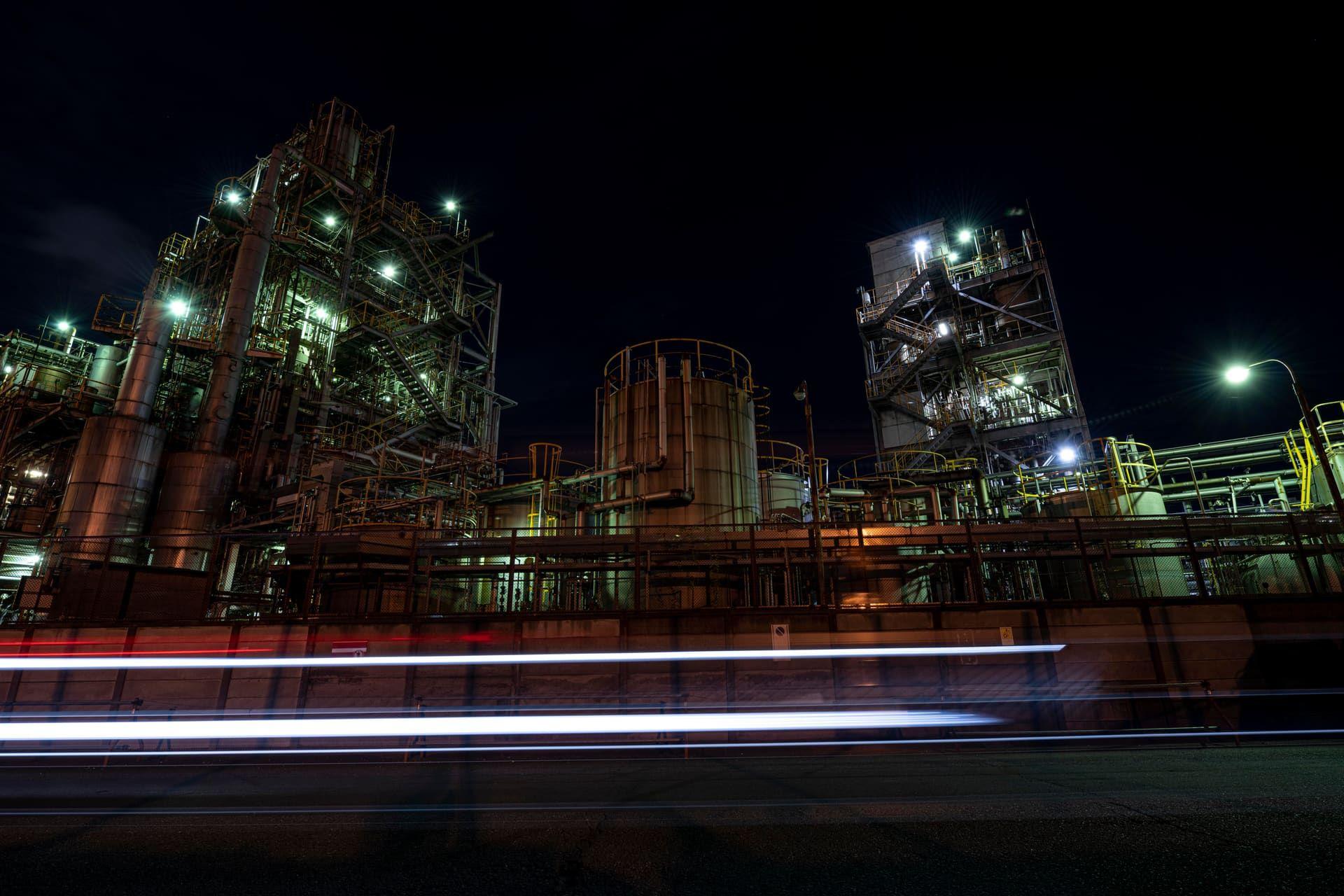
Enzyme-Assisted Extraction Plant
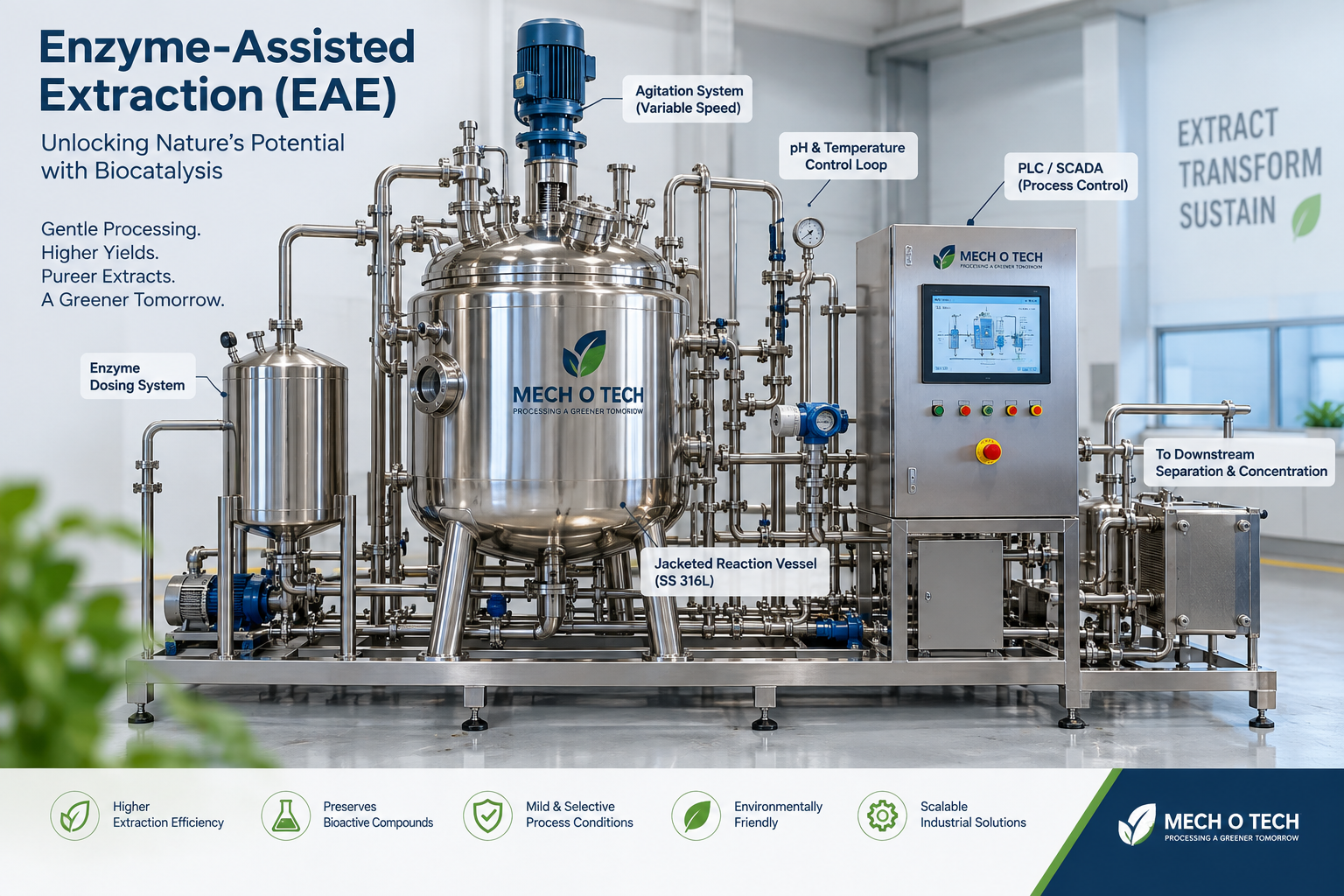
Enzyme-Assisted Extraction Plant
Enzyme-Assisted Extraction (EAE) uses targeted enzymes such as cellulase, pectinase, hemicellulase and protease to break down the structural cell-wall and membrane components that otherwise trap target compounds inside plant tissue. By degrading cellulose, pectin, hemicellulose and structural proteins under mild, controlled conditions, the enzymes open the matrix and let solvent reach the actives directly, without relying on heat, mechanical force or aggressive solvent alone. EAE suits feedstocks where the compound of interest is physically bound or shielded by fibrous or proteinaceous cell-wall structures, and Mechotech engineers turnkey enzyme-assisted extraction systems configured to each feedstock, enzyme system and target compound.
Enzyme-Assisted Extraction works through targeted enzymatic hydrolysis: a selected enzyme or enzyme blend — typically drawn from cellulase, pectinase, hemicellulase and protease classes, chosen to match the specific cell-wall composition of the feedstock — is dosed into a substrate-and-water (or substrate-and-buffer) slurry and held under controlled temperature and pH conditions that suit the enzyme's activity window. Over a defined incubation period, the enzymes cleave the polysaccharide and protein linkages that make up the cell wall and middle lamella, progressively loosening and rupturing the structural matrix so intracellular compounds diffuse out far more readily than they would through the intact cell wall. Because the reaction runs at mild temperature and near-neutral pH rather than under high heat or aggressive solvent, EAE is well suited to bioactives that are sensitive to harsher extraction conditions, and it typically reduces the solvent load needed for adequate recovery. Once hydrolysis has progressed sufficiently, the enzymes are deactivated to stop the reaction at the intended endpoint. Mechotech builds the enzyme reaction/incubation vessel, agitation system, jacketed temperature control, enzyme dosing skid and downstream separation train in SS 304 with product-contact SS 316L to hygienic, GMP-oriented standards, with PLC/SCADA control of temperature, pH, dosing and incubation time. Capacity is configured from pilot to commercial scale.
Process Flow
Technical Specifications
| Technology | Enzyme-Assisted Extraction (EAE) / Enzymatic Hydrolysis Extraction |
|---|---|
| Working Principle | Targeted enzymatic hydrolysis of cell-wall polysaccharides and structural proteins releases intracellular compounds for solvent uptake |
| Enzyme Classes | Cellulase, pectinase, hemicellulase, protease or a configured blend, selected to feedstock cell-wall composition |
| Operating Temperature | Configured to the enzyme system's optimum activity range |
| Operating pH | Configured to the enzyme system's optimum activity range, with in-process pH control |
| Incubation / Reaction Time | Configurable, based on feedstock, enzyme loading and target degree of hydrolysis |
| Solvent / Medium | Water, buffer solutions, or water in combination with ethanol or other process-grade solvents (as applicable) |
| Operating Modes | Batch enzymatic hydrolysis (configurable) |
| Product-contact Material | SS 304 / SS 316L |
| Automation | PLC/SCADA (configurable) with temperature, pH, dosing and batch logging |
| Capacity | Configured to process requirement - pilot to commercial |
| Utilities | Electric power, heating / cooling water for jacket, compressed air |
| Compliance | GMP / cGMP hygienic design |
| Final Output | Liquid extract; optional concentrate or dried powder via downstream recovery and drying |
Manufacturing Process
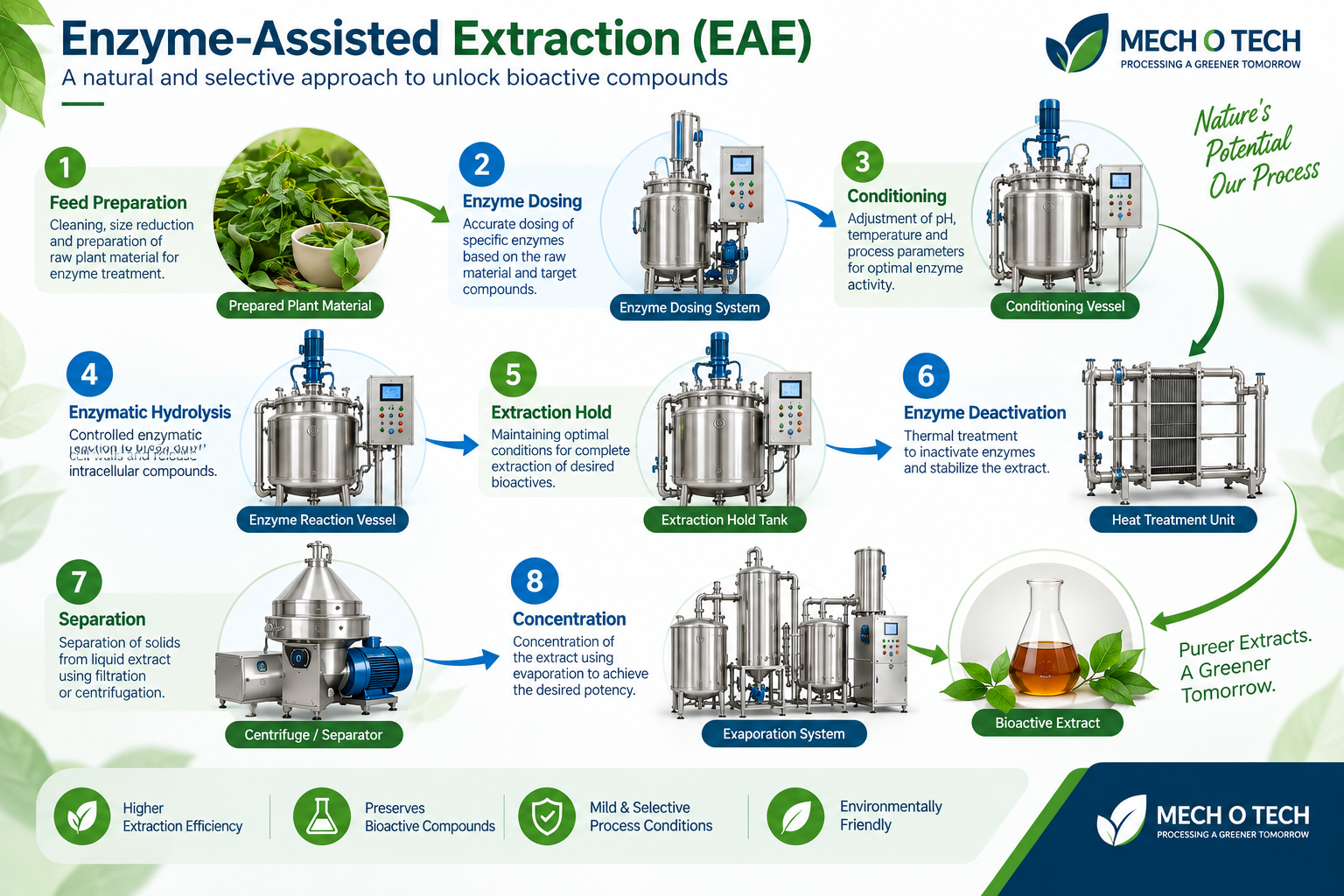
Feed & substrate preparation
Milled or comminuted botanical material is charged into the reaction vessel with water or a buffered aqueous medium to form a substrate slurry. Particle size and slurry consistency are set to give the enzyme good access to the cell-wall surface.
Enzyme dosing
A selected enzyme or enzyme blend — cellulase, pectinase, hemicellulase, protease or a combination, chosen to match the feedstock's cell-wall composition — is metered into the slurry through a calibrated dosing system.
Conditioning to optimum temperature & pH
The slurry is brought to the enzyme's optimum activity range and held there, since enzymatic hydrolysis is highly sensitive to both temperature and pH. A jacket and pH-control loop maintain conditions through the reaction.
Enzymatic hydrolysis (incubation)
Under gentle agitation, the enzymes progressively cleave cellulose, pectin, hemicellulose and structural proteins in the cell wall and middle lamella, loosening the matrix and exposing intracellular compounds to the surrounding medium.
Extraction hold
As the cell-wall structure breaks down, target compounds diffuse into the aqueous or solvent phase. Incubation continues for the time needed to reach the intended degree of hydrolysis and release.
Enzyme deactivation
Once the target endpoint is reached, the enzymes are deactivated — typically by a brief controlled heat step or a pH shift — to halt the reaction and stabilise the extract before downstream processing.
Separation & clarification
The extract is separated from spent solids and residual enzyme protein by filtration or centrifugation, yielding a clarified liquid extract.
Concentration & recovery
Where a solvent phase is used, it is recovered by evaporation and the extract is concentrated; the recovered solvent is returned for reuse. The concentrate can be dried to powder downstream, and the system is flushed for the next batch.
Major Plant Equipment
- Enzyme reaction / incubation vessel
- Jacketed temperature-control system
- Agitation system
- Enzyme dosing skid
- pH monitoring & control loop
- Enzyme deactivation stage (heat or pH-shift)
- Filtration / centrifuge separation stage
- PLC/SCADA automation
Plant Output
Applications
- Nutraceutical and dietary-supplement actives bound within fibrous or proteinaceous plant matrices
- Phytochemicals including polyphenols, flavonoids and anthocyanins shielded by cell-wall structures
- Fruit and vegetable juice, pulp and oil yield enhancement via cell-wall degradation
- Pharmaceutical botanical actives requiring mild, non-thermal release conditions
- Food, beverage and natural flavour ingredients from structurally complex feedstocks
- Cosmetic and personal-care botanical extracts requiring gentle processing
- Heat- and pH-sensitive bioactive compounds unsuited to aggressive thermal or solvent extraction
- R&D, pilot studies and enzyme-system screening for process scale-up
Key Features
Targeted enzymatic cell-wall degradation
Cellulase, pectinase, hemicellulase and protease act selectively on the structural components binding target compounds, opening the matrix without relying on heat or mechanical disruption alone.
Mild, condition-sensitive operation
Reaction temperature and pH are held within the enzyme's optimum activity range, protecting heat- and pH-sensitive actives that harsher extraction methods can degrade.
Enzyme system selectivity
The enzyme blend is matched to the feedstock's actual cell-wall composition, giving a degree of process selectivity that purely physical intensification methods do not offer.
Reduced solvent dependence
By breaking down the physical barrier to diffusion, EAE can lower the solvent load needed for adequate recovery, supporting green and clean-label extraction goals.
Hygienic, GMP-oriented build
Product-contact parts in SS 316L with smooth, CIP-friendly finishes support pharmaceutical, nutraceutical and food-grade production.
Full automation & reaction control
PLC/SCADA control of temperature, pH, enzyme dosing and incubation time with batch logging ensures repeatable, traceable enzymatic reaction control.
Frequently Asked Questions
What is Enzyme-Assisted Extraction?
How does enzyme-assisted extraction work?
What are the advantages of EAE compared with conventional extraction?
What can an enzyme-assisted extraction plant process?
What capacity is available?
What material of construction and compliance does Mechotech use?
Does Mechotech provide turnkey design, manufacture, installation and commissioning?
Ready to discuss your project?
Get a free quote and technical consultation from our engineering team.