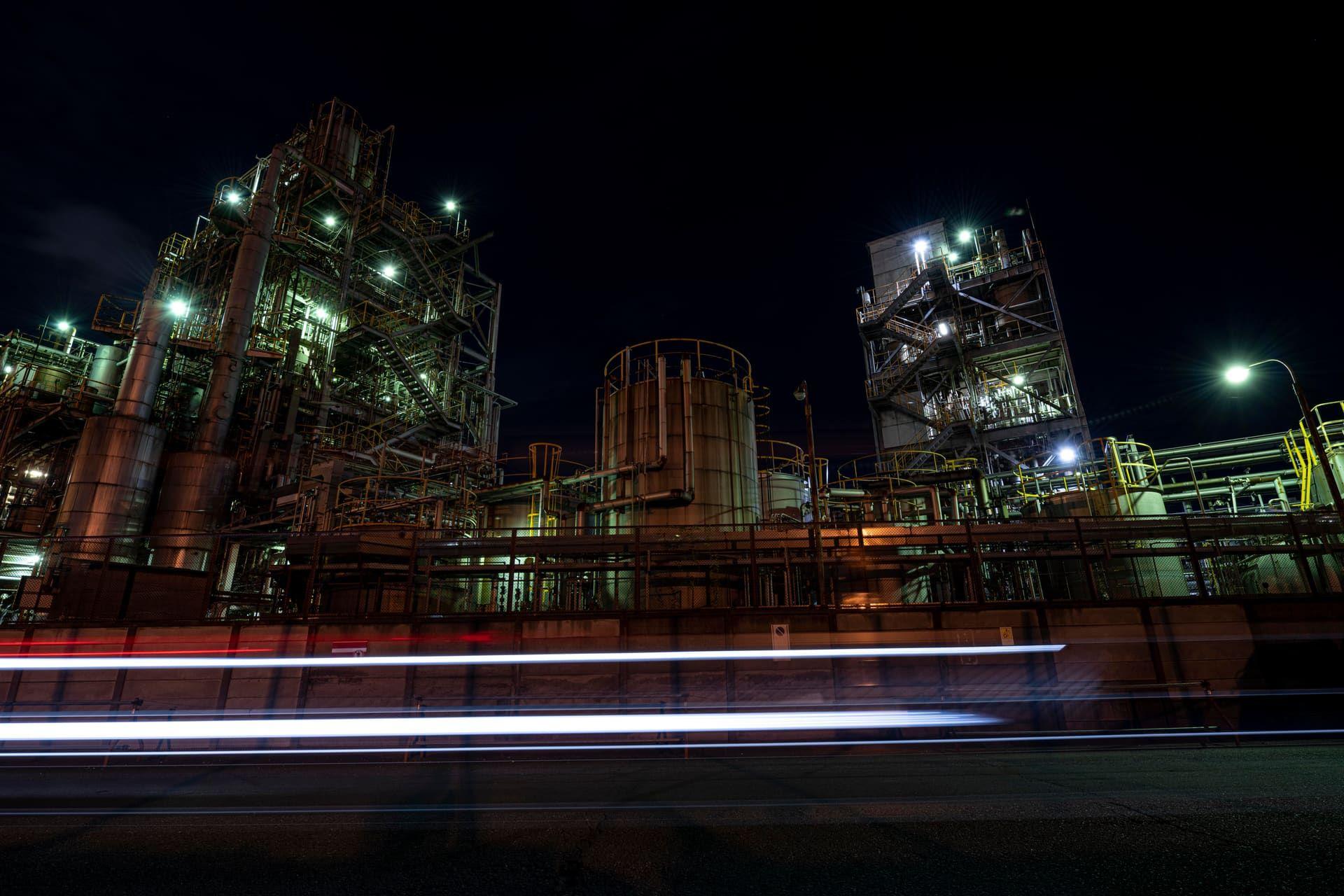
Falling Film Evaporator
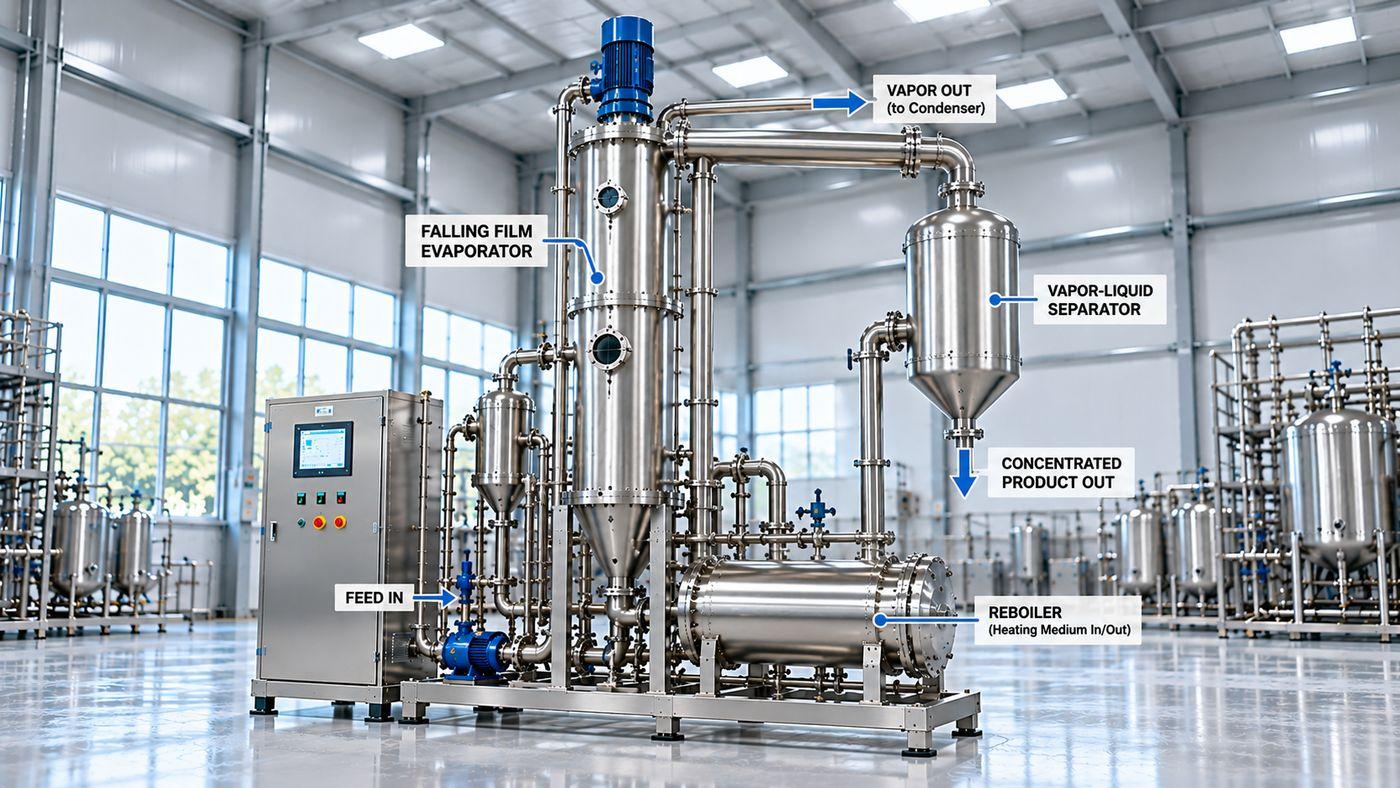
Falling Film Evaporator
Mechotech engineers and manufactures the Falling Film Evaporator as turnkey process equipment that concentrates moderate-viscosity, non-fouling liquids by letting the feed descend as a thin gravity-driven film down the inside wall of heated vertical tubes. Because the film is thin and constantly renewed by gravity and the co-current vapour flow, residence time on the heated surface is very short and the temperature differential needed to drive evaporation is small, making this the most thermally efficient and steam-economical evaporator geometry for feeds that do not scale, crystallize, or thicken sharply as they concentrate.
Feed is distributed across the tube sheet through a calibrated distributor plate or spray nozzles so every tube receives an even liquid load, then falls as a continuous film down the tube bore under gravity while the shell side is heated by steam or hot process fluid; the vapour generated travels downward with the liquid and is separated from the concentrate at the base in a cyclone-type separator. Because heat transfer coefficients on a falling film are high and the driving temperature difference can be kept low, the Falling Film Evaporator is Mechotech's standard choice for large-throughput, single- or first-effect duty ahead of an MEE or MVR train, built in SS 316L (or a process-appropriate grade) with electropolished product-contact surfaces, CIP connections and PLC-based instrumentation. Tube length, tube count, and shell diameter are configured to the specified evaporation load, and the unit is delivered with full documentation to support GMP and regulatory qualification.
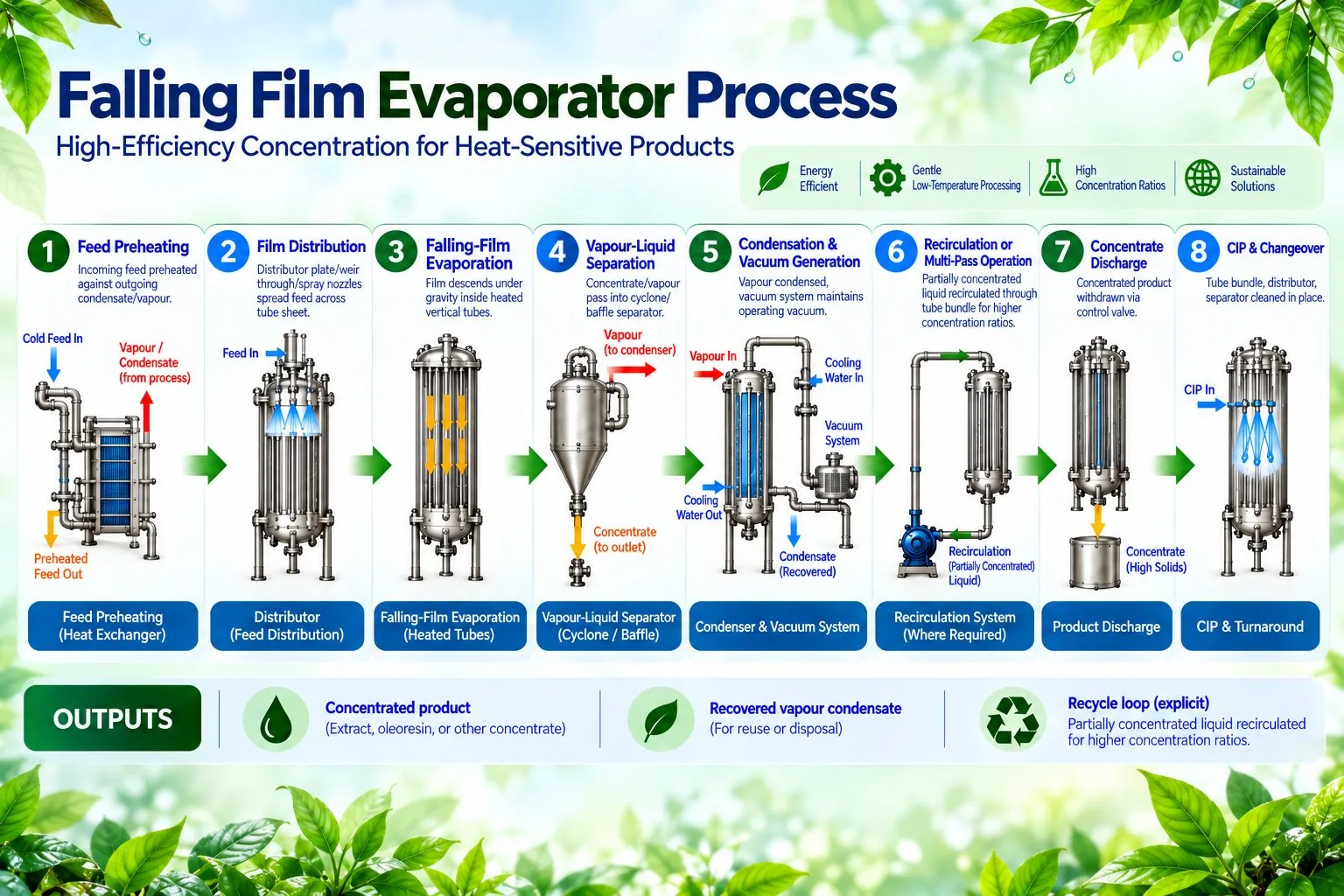
Process Flow
Technical Specifications
| Evaporator Type | Falling Film Evaporator, vertical tube-bundle geometry |
|---|---|
| Working Principle | Thin gravity-driven film descends inside heated vertical tubes under co-current vapour flow |
| Tube Orientation | Vertical, top-fed |
| Heating Medium | Steam or thermic fluid on the shell side (configurable) |
| Operating Mode | Vacuum operation (typical) or atmospheric, depending on product heat sensitivity |
| Feed Distribution | Distributor plate, weir trough, or spray-nozzle distribution |
| Vapour Separation | Cyclone or baffle-type separator at tube base |
| Residence Time | Very short — single-pass film contact, minimizing thermal exposure |
| Suited Feed Character | Moderate-viscosity, non-fouling, non-crystallizing liquids |
| Product-contact Material | SS 316L (or process-appropriate grade), electropolished |
| Condensing System | Surface or barometric condenser with vacuum ejector/pump |
| Automation | PLC-based control of level, temperature, and vacuum (configurable to SCADA) |
| Cleaning | CIP-capable product-contact circuit |
| Configuration | Single-effect or as a first effect within an MEE/MVR train |
| Capacity | Configured to requirement — pilot to large commercial evaporation duty |
| Utilities | Steam / thermic fluid for shell heating, cooling water, vacuum system utilities, electric power, compressed air |
| Compliance | GMP/WHO-GMP hygienic design; documentation for regulatory qualification |
Plant Capacities
| Scale | Typical Duty | Tube Configuration | Effect Arrangement |
|---|---|---|---|
| Pilot | Process validation, low evaporation load | Small tube count, short tube length | Single effect |
| Mid-size commercial | Plant-scale continuous concentration | Medium tube bundle | Single effect or first effect of MEE |
| Large commercial | High-throughput continuous evaporation | Large tube bundle, extended tube length | First effect of MEE/MVR train |
Tube count, tube length, and shell diameter are engineered to the specified evaporation duty and feed properties; exact heat-transfer area and throughput are confirmed during process design.
Manufacturing Process
Feed Preheating
Incoming feed is preheated, typically against outgoing condensate or vapour, so it enters the tube bundle close to its boiling point and flashing begins immediately rather than consuming tube length on sensible heating.
Film Distribution
A distributor plate, weir trough, or spray nozzles spread the preheated feed evenly across the top tube sheet so every tube in the bundle receives a uniform, unbroken liquid film.
Falling-Film Evaporation
The film descends under gravity down the inside of the heated vertical tubes while steam or hot fluid condenses on the shell side; the short contact time and high film turbulence give rapid, gentle evaporation with minimal thermal exposure.
Vapour-Liquid Separation
Concentrate and vapour leaving the tube base pass into a cyclone or baffle-type separator sized to disengage entrained droplets before the vapour proceeds to the condenser.
Condensation & Vacuum Generation
Vapour is condensed in a surface or barometric condenser; a vacuum system (steam ejector or liquid-ring pump) maintains the operating vacuum that lowers the boiling point and protects heat-sensitive product.
Recirculation or Multi-Pass Operation
For higher concentration ratios the partially concentrated liquid is recirculated through the tube bundle, or routed through successive passes, until the target solids content is reached.
Concentrate Discharge
The concentrated product is withdrawn from the separator sump through a control valve, with level and density instrumentation confirming it meets the target concentration before transfer to storage or the next process step.
CIP & Changeover
The tube bundle, distributor, and separator are cleaned in place between batches or product changeovers, restoring tube-wall wetting performance for the next run.
Major Plant Equipment
- Feed preheater
- Distributor plate / weir trough / spray-nozzle assembly
- Vertical heated tube bundle (calandria)
- Shell-side steam/thermic-fluid heating jacket
- Cyclone or baffle-type vapour-liquid separator
- Concentrate circulation pump (for recirculation duty)
- Surface or barometric condenser
- Vacuum system (steam ejector or liquid-ring pump)
- Condensate receiver and pump-out
- Concentrate discharge pump and control valve
- CIP skid and spray-ball connections
- Instrumentation: level, temperature, pressure/vacuum transmitters
- PLC-based control panel with MCC
Plant Output
Applications
- Fruit and vegetable juice concentration
- Dairy concentration (skim milk, whey) ahead of drying
- Botanical and herbal extract pre-concentration
- Black liquor and industrial effluent concentration
- Caustic and process-solution concentration in chemical plants
- Pharmaceutical and nutraceutical intermediate concentration
- First-effect duty within larger MEE and MVR evaporation trains
- Wastewater and RO-reject volume reduction
Key Features
High Heat-Transfer Efficiency
The thin, high-velocity falling film gives high heat-transfer coefficients at a low temperature differential, making this the most steam-economical geometry for suitable feeds.
Short Residence Time
Single-pass film contact on the tube wall minimises thermal exposure, protecting heat-sensitive flavours, colours and bioactives from degradation.
Even Film Distribution
Calibrated distributor plates or spray nozzles maintain a continuous, unbroken film across every tube, preventing dry patches and localized scaling.
Vacuum-Compatible Operation
Operation under vacuum lowers the boiling point for heat-sensitive products and allows multiple falling-film effects to be cascaded in an MEE arrangement.
GMP-Compliant Construction
Electropolished SS 316L product-contact surfaces with CIP connections meet WHO-GMP and Schedule M requirements for regulated-industry production.
Scalable, Multi-Effect Ready
The same tube-bundle geometry scales from pilot validation to large commercial duty and integrates directly as the first effect of an MEE or MVR system.
Frequently Asked Questions
What is a Falling Film Evaporator and how does it work?
What kind of feed is suited to a Falling Film Evaporator?
How is a Falling Film Evaporator different from a Rising Film Evaporator?
Can a Falling Film Evaporator be used as part of a multi-effect system?
What vacuum level and temperature does the evaporator operate at?
What capacity range can Mechotech supply?
Does Mechotech supply the complete Falling Film Evaporator as a turnkey system?
Ready to discuss your project?
Get a free quote and technical consultation from our engineering team.