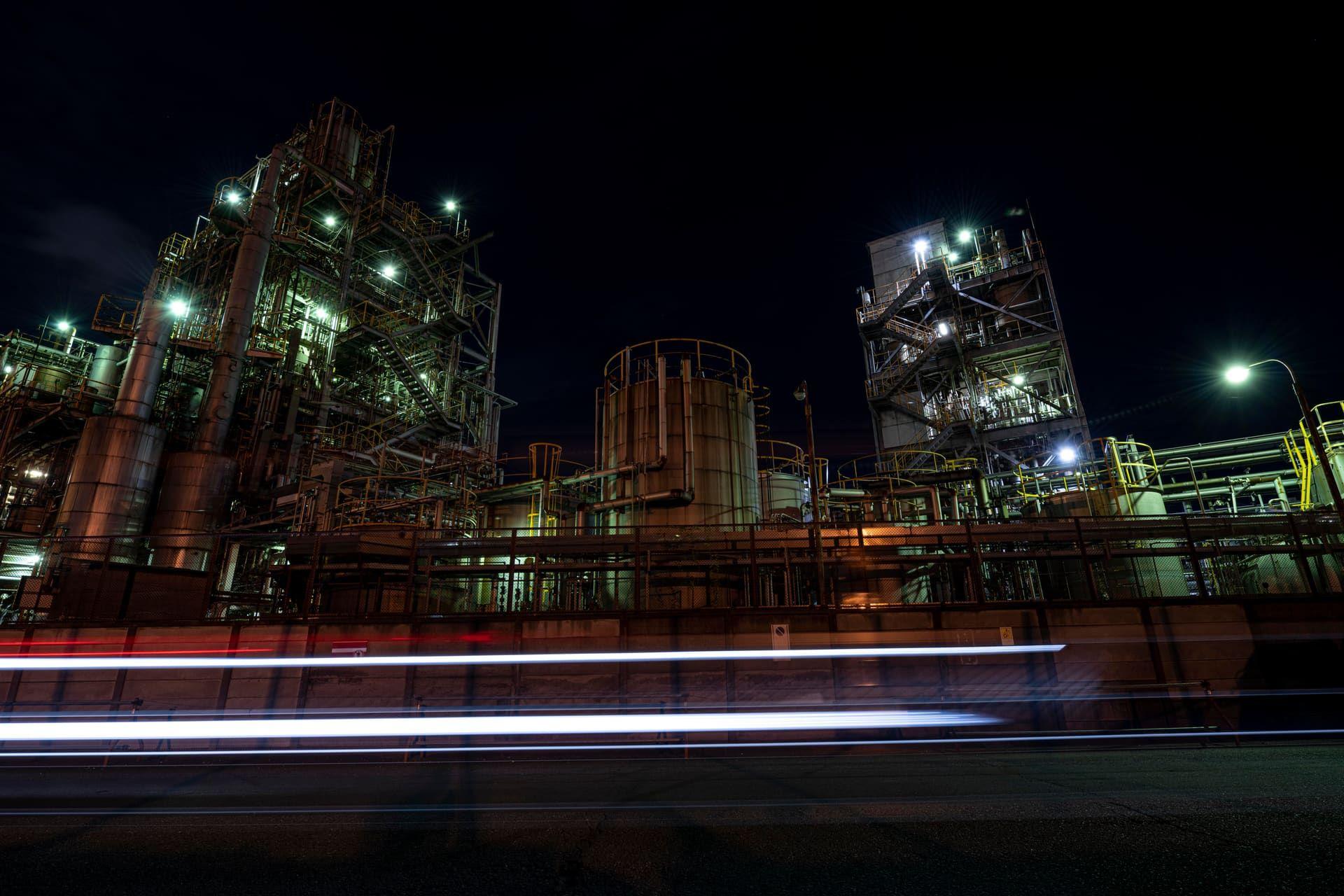
Steam Distillation Plant
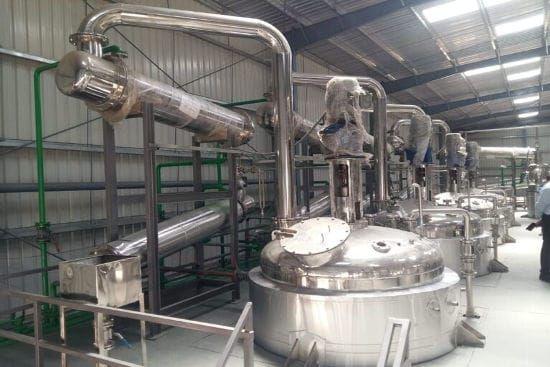
Steam Distillation Plant
Steam distillation is a gentle, widely used separation method in which live or generated steam is passed through aromatic and botanical feedstock to volatilise the essential oil without direct contact between the plant material and boiling water. Because the volatile aroma compounds co-distil with steam well below their normal boiling points, delicate oils are recovered with minimal thermal degradation. It is the industry standard for flowers, leaves, herbs, grasses and woody material where oil quality and yield both matter. Mechotech designs and manufactures complete turnkey steam distillation systems, engineered around each client's feedstock, throughput and target oil specification.
In a steam distillation plant, dry saturated steam is introduced beneath a perforated support carrying the charged botanical material inside a jacketed or insulated distillation vessel. The rising steam ruptures oil-bearing cells and carries the volatile constituents overhead as a vapour mixture, which is then condensed and gravity-separated. Working the aroma fraction at reduced effective temperature protects heat-sensitive top notes, gives a cleaner thermal profile and improves overall energy efficiency versus prolonged direct boiling. Product-contact parts are fabricated in SS 304 / SS 316L with electropolished finishes, matched to shell-and-tube or multi-tube condensers and stainless oil-water (Florentine) separators for clean phase splitting. PLC/SCADA automation manages steam rate, temperature and cycle time, and capacity is configured to requirement from pilot to full commercial scale.
Technical Specifications
| Technology | Steam Distillation |
|---|---|
| Working Principle | Co-distillation of volatile oils with injected steam below their boiling points |
| Operating Temperature | Around atmospheric steam range, configurable to feedstock |
| Operating Pressure | Atmospheric to low-pressure steam, configurable |
| Product-contact Material | SS 304 / SS 316L |
| Condenser / Separation | Shell-and-tube / multi-tube condenser with stainless oil-water (Florentine) separator |
| Automation | PLC/SCADA (configurable) |
| Capacity | Configured to requirement — pilot to commercial |
| Utilities | Steam and cooling water |
| Compliance | GMP hygienic design |
| Final Output | Essential oil / distillate with recovered hydrosol |
Manufacturing Process
Feedstock Charging
Prepared aromatic or botanical material is loaded onto a perforated grid inside the distillation vessel, sized to allow uniform steam penetration through the bed.
Steam Generation & Injection
Dry saturated steam from a boiler or in-built generator is injected below the charge at a controlled rate, avoiding channelling and localised overheating.
Volatilisation
Steam ruptures the oil glands and the volatile aroma compounds co-distil with the vapour at temperatures well below their individual boiling points.
Vapour Transfer
The oil-laden vapour rises through the swan-neck / vapour line and is directed to the condenser train under gentle, controlled flow.
Condensation
Shell-and-tube or multi-tube condensers cooled by circulating water bring the vapour mixture back to a two-phase liquid of essential oil and hydrosol.
Oil-Water Separation
The condensate is decanted in a stainless Florentine (oil-water) separator, splitting the essential oil from the aromatic water by density.
Collection & Hydrosol Recovery
Separated essential oil is collected and polished, while the aromatic hydrosol is recovered for reuse or as a co-product.
Applications
- Essential oil production from flowers, leaves and grasses
- Aromatic herb and medicinal plant processing
- Spice oil recovery from clove, cinnamon, cumin and similar material
- Perfumery and fragrance raw-material distillation
- Flavour ingredient and food aroma extraction
- Mint, lemongrass, citronella and eucalyptus oil distillation
- Pharmaceutical and nutraceutical aromatic ingredient supply
- Hydrosol and aromatic water production
Key Features
Gentle Thermal Profile
Co-distillation with steam volatilises oils below their boiling points, protecting delicate top notes and preserving natural aroma quality.
SS 304 / SS 316L Construction
Product-contact surfaces are fabricated in stainless steel with electropolished, hygienic finishes suited to food, flavour and pharma duty.
Efficient Condensation & Separation
Matched shell-and-tube condensers and stainless Florentine separators deliver clean phase splitting and consistent oil recovery.
PLC/SCADA Automation
Automated control of steam rate, temperature and cycle time gives repeatable batches and reduced operator dependency.
Configurable Capacity
Vessels and utilities are engineered from pilot units to large commercial trains, sized to feedstock bulk density and throughput.
Turnkey Engineering
Mechotech delivers design, fabrication, installation and commissioning as a single accountable scope.
Frequently Asked Questions
What is steam distillation?
How does a steam distillation plant work?
Which feedstocks and oils suit steam distillation?
How does steam distillation compare to hydro and vacuum distillation?
What capacities are available?
What materials and compliance standards are used?
Does Mechotech provide turnkey design, installation and commissioning?
Ready to discuss your project?
Get a free quote and technical consultation from our engineering team.