RVPD – Rotary Vacuum Paddle Dryer
RVPD – Rotary Vacuum Paddle Dryer
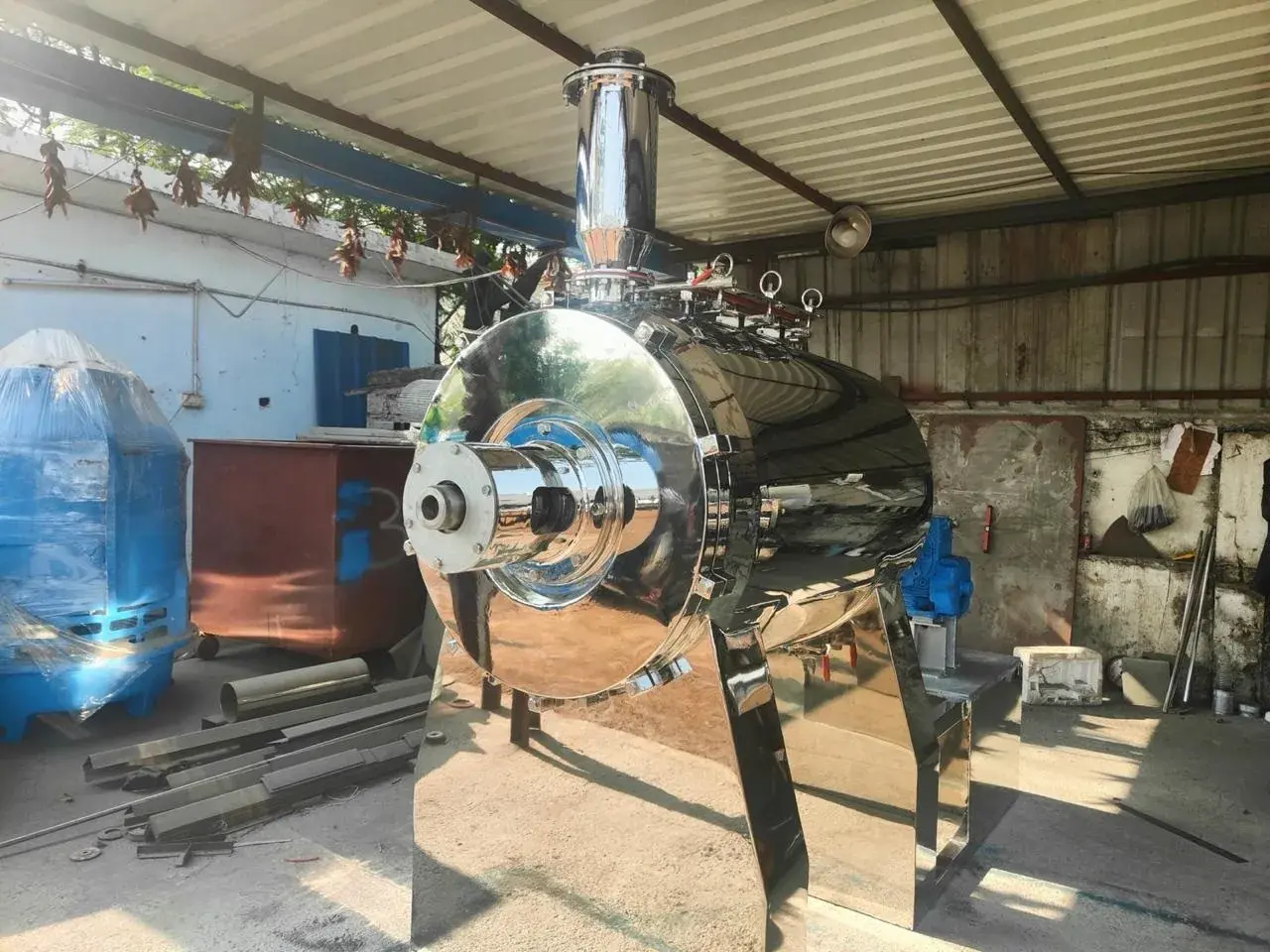
Mechotech engineers and manufactures the RVPD Rotary Vacuum Paddle Dryer as turnkey process equipment for pharmaceutical, nutraceutical, food, and botanical processing lines that need to dry pastes, wet cakes and sludges that would cake or bake onto a static heated surface. A horizontal, jacketed shell houses a shaft fitted with intermeshing paddles that continuously lift, fold and shear the product against the heated wall, breaking up lumps as they form so drying stays uniform from a wet, sticky feed through to a free-flowing dry powder.
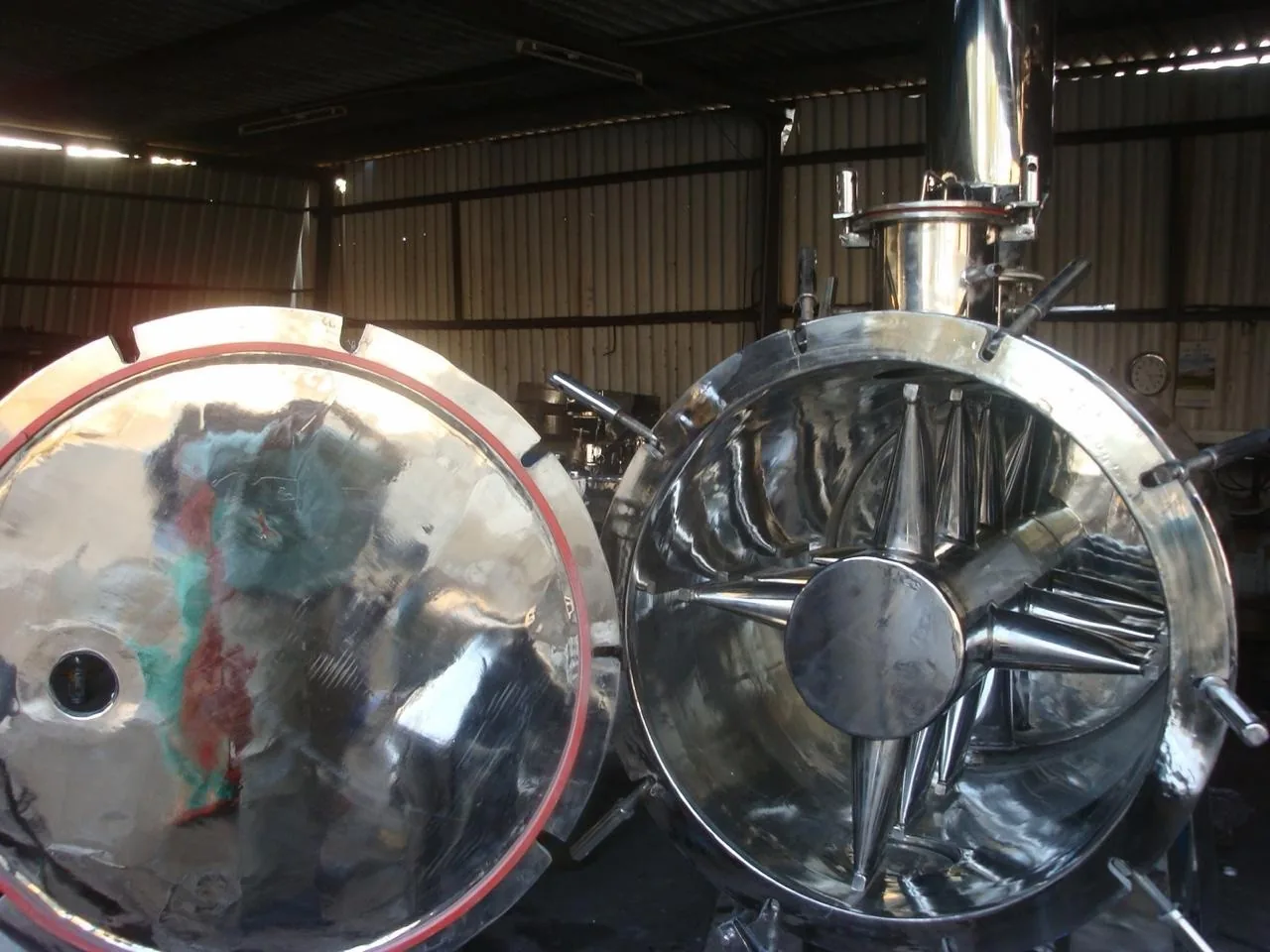
The RVPD Rotary Vacuum Paddle Dryer is built in SS 316L (or a process-appropriate grade) as a horizontal cylindrical vessel with a fully jacketed shell and, on many designs, hollow jacketed paddles on the internal shaft so heat is delivered from both the vessel wall and the agitator itself. The paddles rotate at low speed, continuously lifting and turning the wet mass, breaking up the lumps and agglomerates that form as a sticky paste dries, and constantly presenting fresh product surface to the heated metal. With the shell under vacuum, moisture or solvent evaporates at a reduced temperature and is drawn off to a condenser, allowing pastes, filter cakes, sludges and slurries to be dried in a single vessel from wet feed through to a dry, free-flowing powder without a separate size-reduction step. Electropolished product-contact surfaces, a fully enclosed shell, and PLC-based control of paddle speed, jacket temperature and vacuum support batch or semi-continuous operation, and capacity is configured to the customer's requirement from pilot-scale vessels to larger commercial dryers.
Process Flow
Technical Specifications
| Equipment Type | Rotary Vacuum Paddle Dryer (RVPD) — horizontal paddle-agitated vacuum dryer |
|---|---|
| Vessel Shape | Horizontal cylindrical shell, fully jacketed |
| Construction | SS 316L (or process-appropriate alloy), electropolished product-contact surfaces |
| Agitator | Intermeshing paddle shaft, low-speed rotation; hollow jacketed paddles (design-dependent) |
| Heating | Jacketed shell and paddles, heated by hot water / steam / thermic fluid |
| Vacuum System | Vacuum pump with rotary joint (paddle-heated designs) and external condenser |
| Feed Type | Wet cake, paste, slurry or sludge |
| Operating Mode | Batch or semi-continuous (configurable) |
| Lump Handling | Continuous mechanical lump-breaking via intermeshing paddle action |
| Discharge | Bottom discharge valve, manual or pneumatically actuated |
| Automation | PLC-based control of paddle speed, jacket temperature and vacuum level |
| Cleaning | CIP-capable, fully enclosed shell |
| Capacity | Configured to requirement — pilot-scale vessels to larger commercial dryers |
| Utilities | Hot water / steam / thermic fluid for shell and paddle heating, vacuum system utilities, electric power |
| Compliance | GMP / WHO-GMP / Schedule M hygienic design |
Plant Capacities
| Vessel Scale | Typical Use | Paddle Heating | Operating Mode |
|---|---|---|---|
| Pilot-scale | Process trials, paste-drying validation | Jacket-heated shell (paddles optional) | Batch |
| Production-scale | Commercial paste/cake drying | Jacket-heated shell and paddles | Batch or semi-continuous |
| Large production-scale | High-throughput sludge/cake drying | Jacket-heated shell and paddles | Semi-continuous |
Shell length, paddle configuration and heat-transfer area are sized to the feed's stickiness, solids content and target drying time; exact capacity is configured to your process.
Manufacturing Process
Charging
The wet cake, paste, slurry or sludge is charged into the horizontal vessel through a top port, typically fed directly from an upstream filter, centrifuge or reactor.
Vessel Sealing & Vacuum Draw
The shell is sealed and evacuated to the target vacuum level, lowering the boiling point of moisture or solvent to allow drying at a controlled, reduced temperature.
Paddle Agitation
The internal shaft, fitted with intermeshing paddles, rotates at low speed, continuously lifting, folding and shearing the product against the heated shell wall and paddle surfaces.
Jacket Heating
Hot water, steam or thermic fluid circulates through the shell jacket and, on hollow-paddle designs, through the paddles themselves, conducting heat directly into the agitated product mass.
Lump Breaking & Uniform Drying
As the product dries and passes through its sticky, paste-like phase, the paddles continuously break up lumps and agglomerates, preventing caking or bake-on and keeping the drying bed uniform.
Vapour Removal & Condensation
Evaporated moisture or solvent vapour is drawn from the vessel headspace to an external condenser under vacuum, recovering solvent where applicable and sustaining the vacuum level.
Endpoint Sampling
The product can be sampled during the cycle, or endpoint inferred from torque/power draw and vapour generation trends, to confirm the target residual moisture before the cycle ends.
Discharge & Cleaning
The dried, free-flowing powder is discharged through a bottom valve, and the fully enclosed vessel is cleaned in place between batches for fast, validated product changeover.
Major Plant Equipment
- Horizontal jacketed drying vessel (SS 316L, electropolished)
- Intermeshing paddle agitator shaft
- Hollow jacketed paddles (design-dependent)
- Paddle drive motor, gearbox and mechanical seal
- Rotary joint for paddle-heating circuit
- Jacket heating system (hot water / steam / thermic fluid)
- Vacuum pump and vacuum receiver
- Solvent/vapour recovery condenser
- Top charge port
- Bottom discharge valve
- Instrumentation (vacuum, jacket temperature, paddle torque/speed)
- PLC-based control panel
Plant Output
Applications
- Drying of pharmaceutical and API wet cakes and pastes
- Drying of pigment, dye and chemical filter cakes
- Nutraceutical and botanical extract paste drying
- Effluent sludge and process-residue drying
- Drying of gums, resins and sticky intermediates
- Food-grade paste and concentrate drying
- Catalyst and specialty-chemical cake drying
- Solvent-wet solids requiring in-process solvent recovery
Key Features
Handles Sticky Pastes Without Caking
Intermeshing paddles continuously break up lumps and agglomerates as the product dries, preventing the bake-on and caking that would foul a static heated surface.
Dual Heat Transfer via Shell and Paddles
On hollow-paddle designs, heat is delivered from both the jacketed shell wall and the rotating paddles themselves, increasing heat-transfer area and shortening drying time.
Single-Vessel Wet-to-Dry Conversion
Wet cake or paste is converted to a dry, free-flowing powder in one vessel, without a separate size-reduction or granulation step to break up dried lumps.
Vacuum Operation with Solvent Recovery
Drying under vacuum lowers process temperature for heat-sensitive products and allows evaporated solvent to be condensed and recovered rather than vented.
Batch or Semi-Continuous Operation
The vessel can be run as a discrete batch dryer or configured for semi-continuous feed-and-discharge operation to match upstream and downstream throughput.
GMP-Compliant, CIP-Capable Construction
Electropolished SS 316L surfaces and a fully enclosed, CIP-capable shell meet WHO-GMP and Schedule M hygienic-design expectations for regulated manufacturing.
Frequently Asked Questions
What is a Rotary Vacuum Paddle Dryer (RVPD) used for?
How do the paddles prevent the product from caking?
Are the paddles themselves heated?
Can the RVPD recover solvent from the drying process?
Is the RVPD a batch or continuous dryer?
What capacity range is available?
How does an RVPD differ from an ANFD or RCVD?
How does an RVPD differ from a Vacuum Paddle Dryer?
Ready to discuss your project?
Get a free quote and technical consultation from our engineering team.