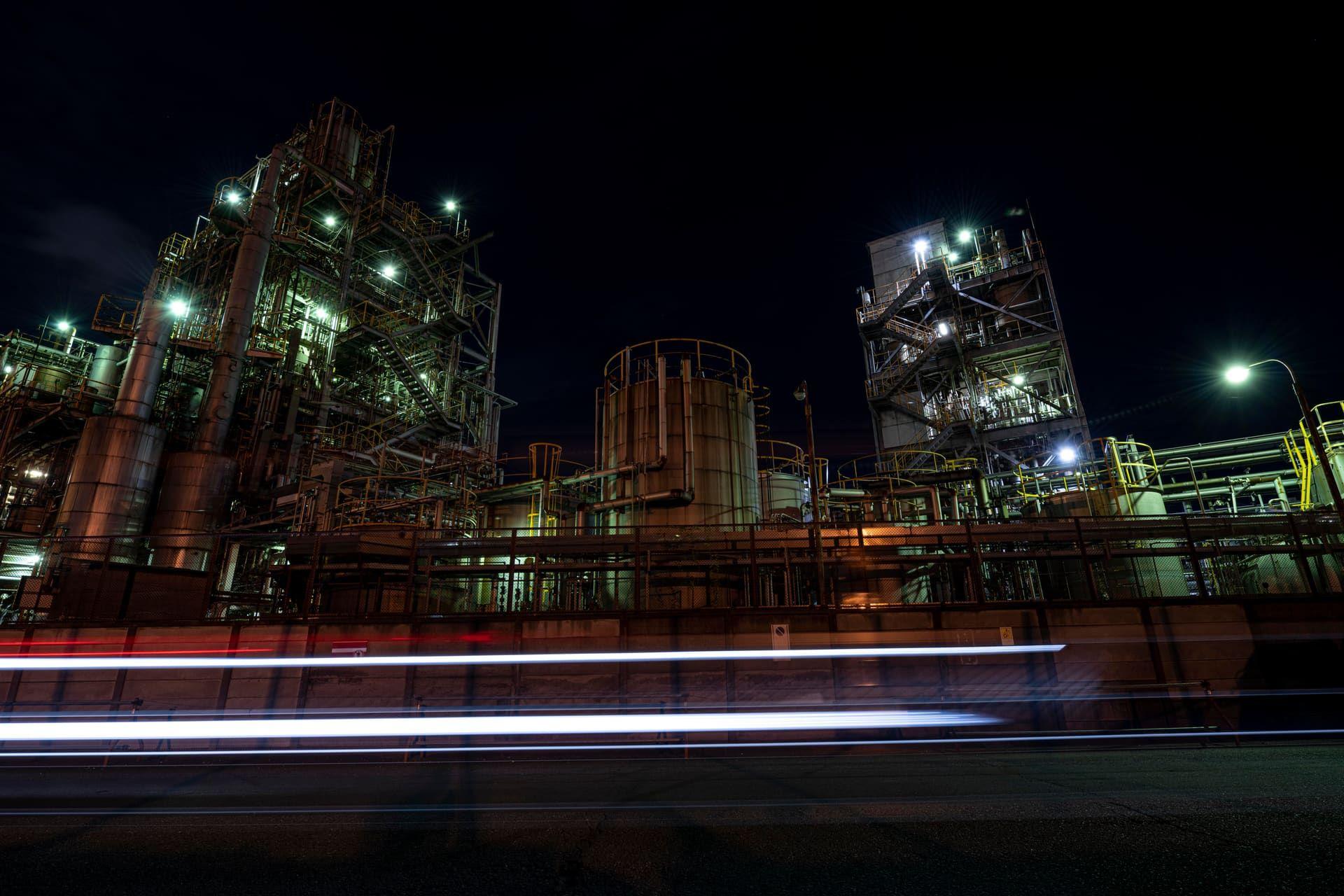
Ultrasound-Assisted Extraction Plant
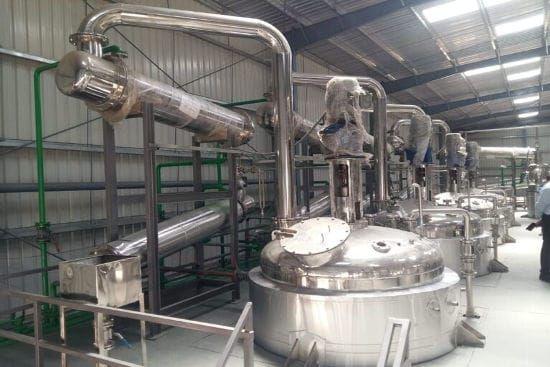
Ultrasound-Assisted Extraction Plant
Ultrasound-Assisted Extraction (UAE) uses high-intensity ultrasonic waves to drive acoustic cavitation in a solvent-and-solids slurry. The rapid formation and violent collapse of microbubbles generates intense local shear, microjets and pressure that rupture plant cell walls and push solvent into the matrix. This mechanical intensification releases target compounds quickly, at lower temperatures and with less solvent than conventional extraction. UAE suits heat-sensitive actives and a broad range of botanicals, and Mechotech engineers turnkey ultrasonic extraction systems configured to each feedstock, solvent and target compound.
Ultrasound-Assisted Extraction works through acoustic cavitation: ultrasonic energy, typically in the low-frequency power-ultrasound range around 20 to 40 kHz, creates oscillating bubbles that collapse and produce localised turbulence, shear and micro-scale jetting. This disrupts cell walls, thins the boundary layer and greatly enhances solvent penetration and mass transfer, giving higher yields in shorter times with reduced solvent and lower operating temperatures. It works with water, ethanol, hydro-alcoholic and other food- or pharma-grade solvents and preserves thermally fragile compounds. Mechotech builds the sonication reactors, probe or transducer assemblies, jacketed vessels and circulation loop in SS 304 with product-contact SS 316L to hygienic, GMP-oriented standards, with PLC/SCADA control of amplitude, temperature and flow. Capacity is configured from pilot to commercial scale.
Technical Specifications
| Technology | Ultrasound-Assisted Extraction (UAE) / Ultrasonic Extraction |
|---|---|
| Working Principle | Acoustic cavitation from ultrasonic energy ruptures cell walls and intensifies solvent penetration and mass transfer |
| Ultrasonic Frequency | Power-ultrasound range, typically around 20 to 40 kHz (configurable) |
| Operating Temperature | Configurable, typically moderate to protect heat-sensitive actives |
| Solvent | Water, ethanol, hydro-alcoholic and other process-grade solvents (as applicable) |
| Operating Modes | Batch and continuous / flow-through sonication (configurable) |
| Product-contact Material | SS 304 / SS 316L |
| Automation | PLC/SCADA (configurable) with amplitude, temperature and batch logging |
| Capacity | Configured to process requirement - pilot to commercial |
| Utilities | Electric power for generators, cooling / chilled water for jacket, compressed air |
| Compliance | GMP / cGMP hygienic design |
| Final Output | Liquid extract; optional concentrate or dried powder via downstream recovery and drying |
Manufacturing Process
Feed & solvent charging
Milled botanical material and the selected solvent are charged to the sonication vessel to form a slurry. Correct solid-to-solvent ratio supports efficient cavitation and mass transfer.
Slurry circulation
The slurry is agitated or circulated through the ultrasonic reactor. Continuous movement exposes fresh material to the cavitation zone for uniform treatment.
Ultrasonic irradiation
Transducers or probes deliver ultrasonic energy that drives acoustic cavitation in the liquid. Collapsing microbubbles rupture cell walls and force solvent into the matrix.
Temperature control
A jacket removes the heat generated by sonication to hold a set, usually moderate, temperature. This protects heat-sensitive actives while extraction proceeds.
Extraction hold
Sonication continues until the target release is reached, monitored by time or in-process checks. Cavitation-enhanced diffusion completes recovery in a short cycle.
Separation & clarification
The extract is separated from spent solids by filtration or centrifugation. Fines are removed to yield a clean liquid extract.
Concentration & recovery
Solvent is recovered by evaporation and the extract is concentrated. Recovered solvent is returned for reuse to reduce cost and waste.
Finishing & cleanup
The concentrate can be dried to powder downstream and the system is flushed for the next batch. CIP-friendly design simplifies turnaround.
Applications
- Nutraceutical and dietary-supplement actives
- Phytochemicals including polyphenols, flavonoids and anthocyanins
- Essential oils, oleoresins and natural colours
- Pharmaceutical botanical actives and standardised extracts
- Food, beverage and natural flavour ingredients
- Cosmetic and personal-care botanical extracts
- Heat-sensitive and delicate bioactive compounds
- R&D, pilot studies and process scale-up
Key Features
Cavitation-driven intensification
Acoustic cavitation ruptures cell walls and thins boundary layers, boosting solvent penetration and mass transfer for higher yields.
Lower temperature operation
Effective extraction at moderate temperatures protects thermally sensitive actives and reduces the risk of degradation.
Reduced solvent and shorter cycles
Intensified mass transfer cuts both solvent consumption and extraction time compared with maceration or reflux methods.
Green, flexible solvent use
Works with water, ethanol and hydro-alcoholic blends, supporting clean-label and green-extraction goals while allowing selectivity tuning.
Hygienic, GMP-oriented build
Product-contact parts in SS 316L with smooth, CIP-friendly finishes support pharmaceutical, nutraceutical and food-grade production.
Full automation & amplitude control
PLC/SCADA control of ultrasonic amplitude, temperature and flow with batch logging ensures repeatable, traceable operation.
Frequently Asked Questions
What is Ultrasound-Assisted Extraction?
How does ultrasound-assisted extraction work?
What are the advantages of UAE compared with conventional extraction?
What can an ultrasound-assisted extraction plant process?
What capacity is available?
What material of construction and compliance does Mechotech use?
Does Mechotech provide turnkey design, manufacture, installation and commissioning?
Ready to discuss your project?
Get a free quote and technical consultation from our engineering team.