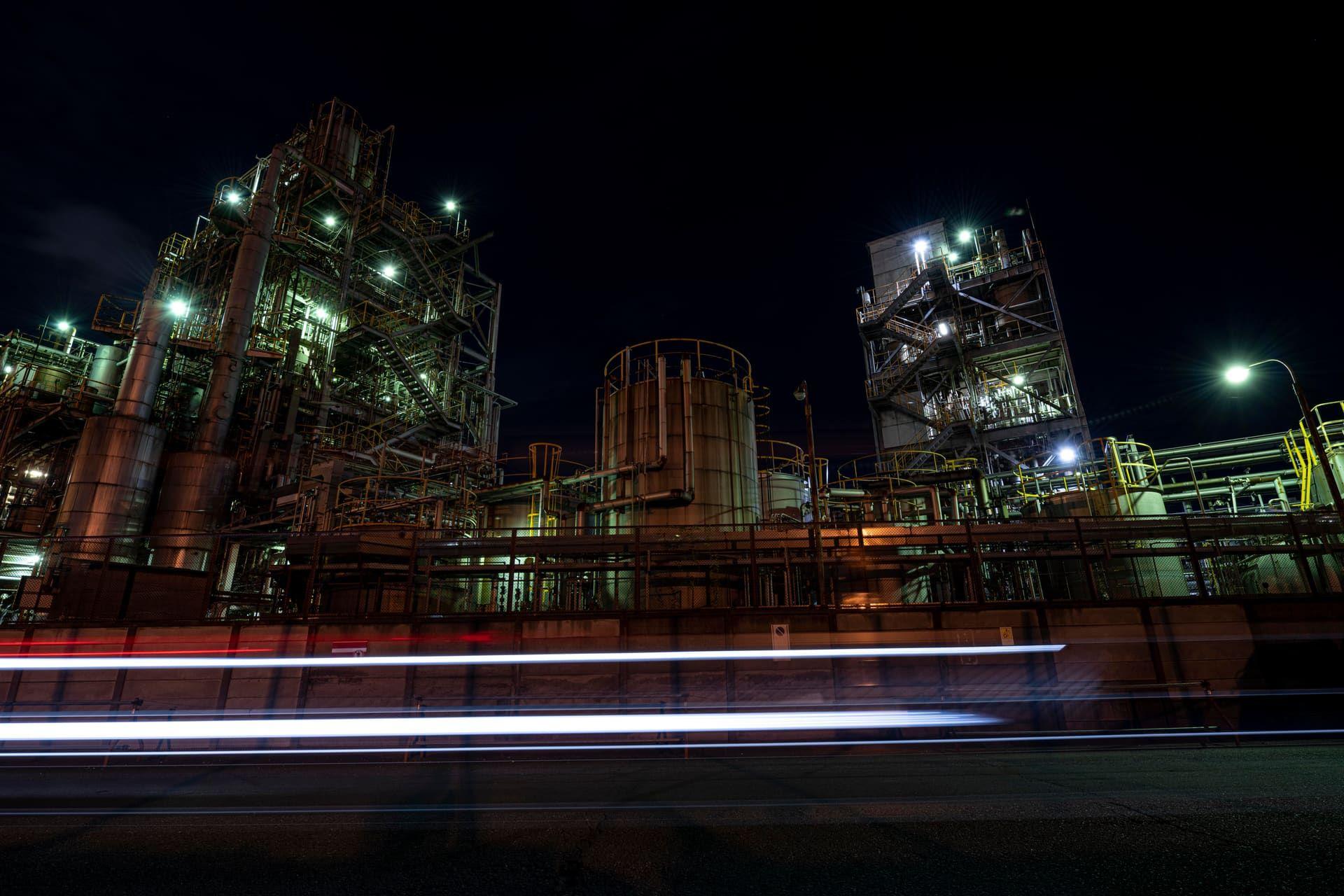
FBD – Fluidised Bed Dryer
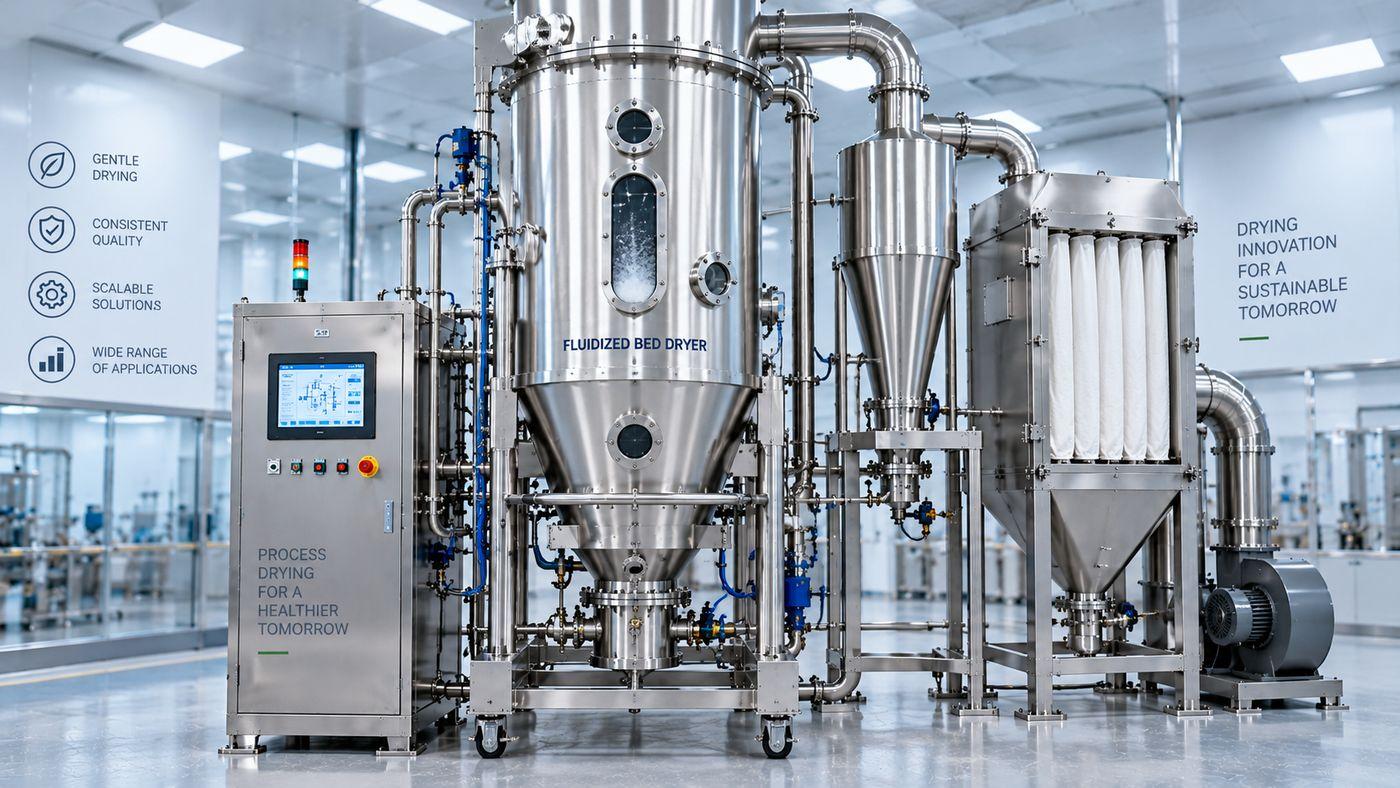
FBD – Fluidised Bed Dryer
A fluidised bed dryer (FBD) dries granular and particulate solids by passing heated, filtered air upward through a perforated bed so that the particles are suspended and move like a fluid. Each particle is surrounded by drying air, which gives rapid, uniform heat and mass transfer. Within a pharmaceutical, nutraceutical, food or botanical line it typically dries granules, powders and agglomerates after wet processing. Mechotech designs and manufactures turnkey FBD systems configured to the client’s product and target moisture specification.
Hot air passes through an inlet filter and heater, then upward through a perforated distributor plate beneath the product bed. At the fluidising velocity the bed lifts and the particles tumble through the stream, so moisture evaporates into the air; exhaust air passes through bag filters or a cyclone so that fines are retained before the exhaust fan. Mechotech builds the product container, air handling and fines-recovery section in SS 316L (or a process-appropriate grade) with electropolished product-contact surfaces and cleaning-in-place connections, under PLC-based control of inlet temperature, airflow and drying time. Capacity, air flow and heating medium are configured to the feed material and are established during process development and pilot validation.
Technical Specifications
| Technology | Hot-air fluidised-bed drying of granular and particulate solids |
|---|---|
| Working Principle | Heated, filtered air passes upward through a perforated plate, suspending the product bed so each particle is dried by the air stream |
| Illustrated Configuration | Vertical product bowl and expansion chamber, a control panel, an air-handling and filter section and a dust-collecting bag-filter unit with a process fan, as shown on the product illustration; the configuration is selected to the duty |
| Process Mode | Batch with a product container; continuous formats can be evaluated for steady high-volume duty |
| Air Handling | Inlet air filtration, air heater and process fan, configured to the product |
| Fines Recovery | Bag filter or cyclone on the exhaust air |
| Product-contact Material | SS 316L (or process-appropriate grade), electropolished |
| Cleaning | CIP connections for cleaning between batches |
| Automation | PLC-based control of inlet temperature, airflow and drying time (configurable) |
| Capacity | Configured to requirement — pilot to commercial scale |
| Utilities | Heating medium (steam or electrical, as configured), compressed air, electrical power |
| Compliance | GMP hygienic design; full documentation for qualification |
| Output | Dried granules or powder at the target moisture level |
Plant Capacities
| Scale | Typical Duty | Configuration |
|---|---|---|
| Pilot | Process validation, small batches, drying-curve development | Small product container; laboratory-to-pilot air handling |
| Mid-size commercial | Plant-scale batch drying | Medium product container with fines-recovery section |
| Large commercial | High-throughput batch or continuous drying | Large product container or continuous configuration, sized to the duty |
Container volume, air flow and heating duty are configured to the feed material, bulk density and target moisture; a pilot drying trial is recommended before scaling.
Manufacturing Process
Product Charging
The wet granules or powder are loaded into the product container, which is docked to the drying chamber.
Air Heating & Fluidisation
Inlet air is filtered, heated and drawn upward through the perforated distributor plate until the bed is fluidised.
Drying
Moisture evaporates into the air stream as the suspended particles circulate; inlet temperature and airflow are controlled to the product’s limits.
Fines Retention
Exhaust air passes through bag filters or a cyclone so that entrained fines are retained rather than lost to the exhaust.
Cooling & Discharge
Once the target moisture is reached the heating is stopped, the bed can be cooled with ambient air and the product is discharged from the container.
Clean-in-Place
The chamber, container and filters are cleaned between batches to avoid cross-contamination.
Major Plant Equipment
- Product container (bowl) with perforated distributor plate
- Drying chamber / expansion chamber
- Inlet air filter and air heater
- Process fan and exhaust ducting
- Bag filter or cyclone for fines recovery
- CIP connections and spray-ball cleaning
- Instrumentation — temperature, airflow and differential-pressure sensors
- PLC-based control panel with MCC
Plant Output
Applications
- Drying of granulated pharmaceutical and nutraceutical blends
- Drying of herbal and botanical extract powders and agglomerates
- Drying and cooling of free-flowing food and flavour ingredients
- Batch drying after wet granulation
- Pilot drying-curve development ahead of commercial sizing
Key Features
Uniform Particle Drying
Fluidisation exposes each particle to the drying air, giving rapid, even moisture removal across the bed.
Fines Recovery
Bag filters or a cyclone on the exhaust retain entrained fines.
Hygienic SS 316L Construction
Electropolished product-contact surfaces with CIP connections support cleaning between batches.
PLC-Based Control
Inlet temperature, airflow and drying time are controlled for repeatable batches.
Scalable Capacity
The dryer is configured to requirement from pilot scale upward, with modular expansion.
Frequently Asked Questions
Does Mechotech supply the complete FBD Fluidised Bed Dryer?
What is a fluidised bed dryer and how does it work?
Which materials suit a fluidised bed dryer?
How does an FBD differ from a spray dryer, tray dryer or freeze dryer?
Which related drying equipment does Mechotech list?
How is the dryer cleaned between batches?
What capacities are available for the FBD Fluidised Bed Dryer?
What information is needed to specify an FBD?
Ready to discuss your project?
Get a free quote and technical consultation from our engineering team.