Membrane Filtration (MF / UF / NF / RO) System
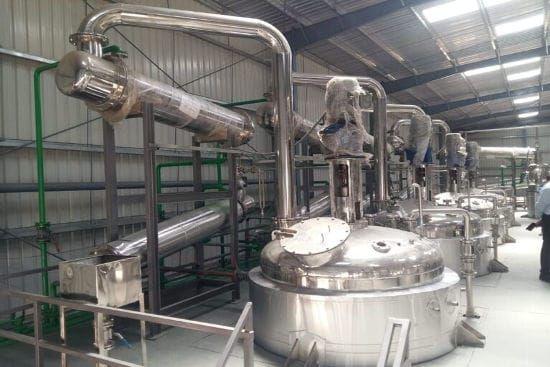
Membrane Filtration (MF / UF / NF / RO) System
Membrane filtration is a pressure-driven separation technology that passes a liquid across a semi-permeable membrane, retaining species larger than the membrane's cut-off while allowing smaller molecules and solvent to permeate. The spectrum runs from microfiltration (MF) through ultrafiltration (UF) and nanofiltration (NF) to reverse osmosis (RO), each removing progressively smaller species. In an extraction or process line these systems clarify crude extract, concentrate valuable actives, desalt, and purify without heat or phase change, protecting heat-sensitive compounds. Mechotech designs and manufactures turnkey membrane filtration systems, supplying complete engineered skids for pharmaceutical, nutraceutical, food and botanical extraction industries.
Membrane filtration works by applying pressure to drive feed across a semi-permeable membrane, splitting it into a permeate that passes through and a retentate that is held back, most commonly in a cross-flow arrangement that continuously sweeps the surface to limit fouling. MF separates suspended solids and microbes, UF retains macromolecules and colloids, NF rejects multivalent ions and small organics, and RO removes nearly all dissolved species down to monovalent salts. This delivers clarity, high product purity, strong recovery, and concentration of actives at ambient or mild temperature. Wetted components are built in SS 304 or SS 316L with sanitary membrane elements and hygienic, GMP-oriented design, PLC-based automation, and membrane area and capacity configured to the client's requirement.
Technical Specifications
| Technology | Pressure-driven membrane separation (MF / UF / NF / RO) |
|---|---|
| Working Principle | Feed driven across a semi-permeable membrane splits into permeate and retentate by size and charge selectivity |
| Separation Range | MF retains suspended solids and microbes; UF retains macromolecules and colloids; NF rejects multivalent ions and small organics; RO removes nearly all dissolved species |
| Flow Configuration | Cross-flow (tangential) with recirculation and diafiltration options |
| Membrane Elements | Spiral-wound, hollow-fibre, tubular or ceramic (application-selected) |
| Product-contact Material | SS 304 / SS 316L with sanitary membrane element types |
| Automation | PLC/SCADA (configurable) |
| Capacity | Configured to requirement |
| Utilities | Electrical power, feed pumping, CIP and rinse water as applicable |
| Compliance | GMP hygienic design |
| Output | Clarified, concentrated, desalted or purified permeate and retentate streams |
Manufacturing Process
Feed Pretreatment
The incoming stream is pre-filtered and conditioned to remove coarse solids and protect the membrane elements from premature fouling.
Pressurised Feed Delivery
A feed pump raises the stream to the trans-membrane pressure appropriate to the selected MF, UF, NF or RO stage.
Cross-Flow Membrane Separation
Feed flows tangentially across the membrane so permeate passes through while retained species are swept along, minimising surface build-up.
Permeate Collection
The clarified, purified or desalted permeate is collected for downstream use or further membrane polishing.
Retentate Concentration or Recirculation
The retentate carrying concentrated actives or rejected species is recirculated to raise concentration or diafiltered to wash out unwanted solutes.
Diafiltration and Desalting
Fresh water or buffer is added to the retentate loop to displace salts and small molecules, refining purity of the target product.
Membrane Cleaning
CIP cycles restore permeate flux by removing accumulated foulants between production runs.
Applications
- Clarification of crude botanical and herbal extracts (MF/UF)
- Concentration of high-value actives without thermal load (UF/NF/RO)
- Desalting and buffer exchange by diafiltration (UF/NF)
- Purification and fractionation of macromolecules by molecular size (UF)
- Decolorization and removal of small coloured impurities (NF)
- Recovery and dewatering of extract streams (RO)
- Sterile-grade clarification and microbial reduction (MF)
- Water purification and process water polishing (RO)
Key Features
Full MF-UF-NF-RO Spectrum
Systems are configured across the pressure-driven membrane range so the correct cut-off is applied for clarification, concentration, desalting or purification.
Cross-Flow Fouling Control
Tangential flow continuously sweeps the membrane surface, sustaining permeate flux and extending element life on difficult feeds.
Gentle Ambient Separation
Separation by pressure rather than heat protects thermolabile actives, aromas and proteins from degradation.
Hygienic GMP Construction
Sanitary SS 304 or SS 316L wetted parts with food- and pharma-grade membrane elements support CIP and GMP-oriented operation.
Automated Skid Control
PLC-based automation regulates pressure, flow, diafiltration and cleaning for repeatable, operator-independent performance.
Frequently Asked Questions
What is membrane filtration (MF / UF / NF / RO)?
How does membrane filtration work?
Where does membrane filtration fit in an extraction or purification line?
What are the key benefits of membrane filtration?
What capacity of membrane system can Mechotech supply?
What materials and compliance standards apply?
Does Mechotech supply the membrane filtration plant as a turnkey system?
Ready to discuss your project?
Get a free quote and technical consultation from our engineering team.