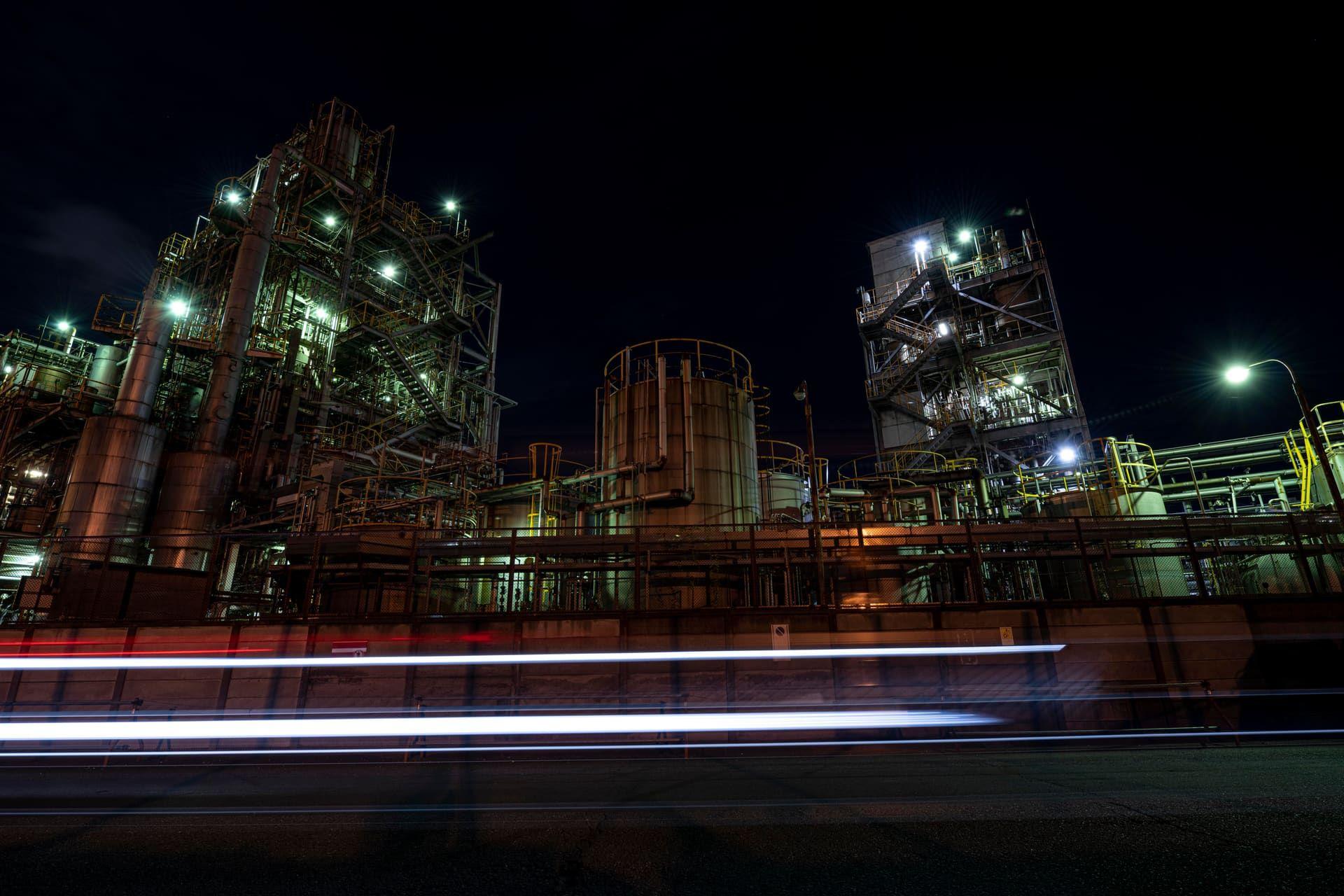
Moringa Extraction Plant
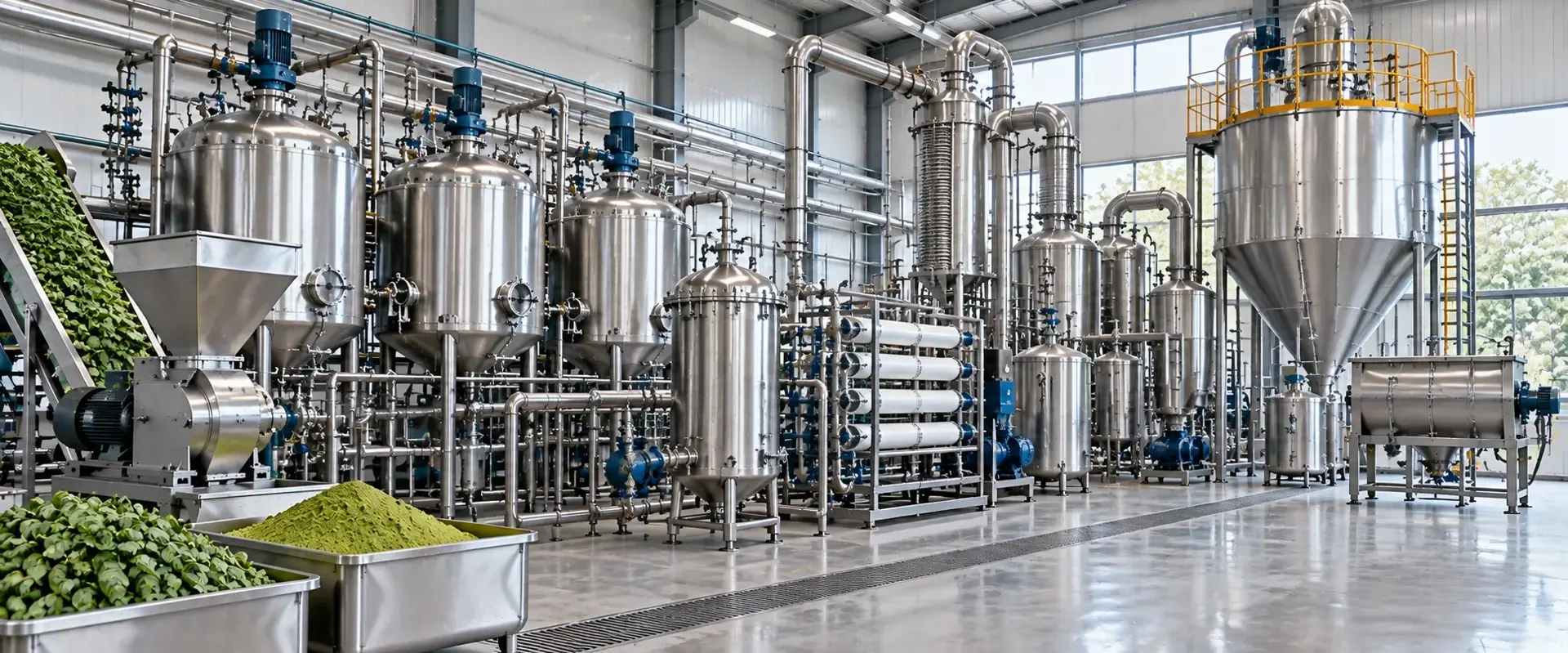
Moringa Extraction Plant
Mechotech designs and manufactures turnkey moringa extraction plants, engineered and built at our Hyderabad, India works. The main catalogue route is a hydro-alcoholic leaf extract plant that makes a glycoside-standardised, polyphenol and flavonoid-rich extract. Moringa seed routes, ben oil by supercritical CO2 and coagulant protein by enzyme-assisted extraction, are catalogued separately. This page is for ingredient manufacturers who want an extract plant, and it is clear that moringa leaf drying and powder-milling lines and moringa oil pressing are not catalogued as a plant.
The leaf plant is a closed-loop hydro-alcoholic line: raw material washing and inspection, a hammer mill or pulveriser, jacketed SS 316L extraction vessels, pressure leaf filtration followed by cross-flow membrane clarification, a low-temperature vacuum evaporator with solvent recovery, and a spray dryer chosen to help protect chlorophyll and colour. Moringa's polyphenols, flavonoids and glycosides are heat- and light-sensitive, so extraction and concentration run under controlled, oxidation-minimised conditions. The design is GMP-oriented and hygienic, with documentation to support the customer's own qualification. Final configuration depends on raw material, process requirement, capacity and engineering review.
Technical Specifications
| Plant Type | Moringa leaf extract plant, hydro-alcoholic and glycoside-standardised; seed extraction routes catalogued separately |
|---|---|
| Leaf Feedstock | Moringa oleifera leaves, fresh or dried (6-10% moisture in the reference project) |
| Standardisation | Configurable range listed on the product page: 5% to 40% Glycosides by Gravimetry |
| Target Fractions | Quercetin and polyphenols; leaf wax fraction; water-soluble polysaccharides |
| Extraction | Closed-loop hydro-alcoholic extraction in jacketed SS 316L extractors; 7 candidate technologies screened on the product page |
| Filtration & Concentration | Pressure leaf filtration with cross-flow membrane clarification; low-temperature vacuum evaporator with solvent recovery |
| Drying | Spray dryer, chlorophyll- and colour-retentive |
| Seed Routes | Moringa seeds: ben oil by supercritical CO2; coagulant protein by enzyme-assisted extraction |
| Product-contact Material | SS 316L, electropolished, CIP-cleanable |
| Automation | PLC-based batch control, configurable from manual to fully automatic |
| Plant Capacity | Configured to requirement; the reference project in the case study processes 10 MT/day of moringa leaves |
| Not Listed in Catalog | Moringa leaf drying and powder-milling lines; moringa oil pressing plants |
Manufacturing Process
Raw Material Preparation
Moringa leaf is cleaned, inspected and milled under controlled conditions to a uniform particle size that is sized for efficient extraction, with conditions set to help protect heat-sensitive nutrients and chlorophyll.
Extraction
Milled leaf is extracted with a hydro-alcoholic solvent system in closed jacketed SS 316L extractors at controlled temperature over multiple cycles, to recover flavonoids and glycosides while limiting oxidation.
Filtration & Membrane Clarification
The extract (miscella) is clarified through pressure leaf filtration followed by cross-flow membrane filtration, improving clarity and removing fine particulates in a step intended to be gentle on sensitive bioactives.
Concentration & Solvent Recovery
The clarified extract is concentrated in a low-temperature vacuum evaporator, with solvent recovered through the condenser return system.
Standardisation
The concentrate is assayed and adjusted to the declared specification, such as glycosides by gravimetry, before drying.
Drying
The standardised extract is spray-dried under controlled inlet and outlet temperatures chosen to help protect chlorophyll and antioxidant activity; how much is retained is confirmed in pilot trials.
Quality Control & Packing
Each batch is released after assay, residual-solvent, heavy-metal, microbial and moisture testing, then packed under batch-traceable, GMP-oriented conditions with documentation.
Major Plant Equipment
- Raw material washing and inspection conveyor
- Hammer mill / pulveriser
- Jacketed SS 316L extraction vessels
- Transfer pumps
- Pressure leaf filters
- Cross-flow membrane filtration unit
- Low-temperature vacuum evaporator
- Closed-loop solvent recovery system
- Purification system
- Spray dryer
- Ribbon blender
- Product storage tanks
- CIP (clean-in-place) system
- PLC automation panel, electrical MCC and instrumentation
Plant Output
Case Study
Moringa Leaf Extraction Plant
See how this plant was engineered and delivered for a real project.
Applications
- Functional food, green health drinks and beverage applications
- Natural chlorophyll and green-colour ingredient supply
- Nutraceutical capsule, tablet and dietary-supplement manufacturing
- Pharmaceutical standardised ingredient supply
- Cosmetic and personal care active ingredients
- Moringa seed ben oil and coagulant protein extracts (seed routes)
Key Features
Leaf Extract Plant, Clearly Scoped
The catalogue route is a hydro-alcoholic extract plant. Leaf drying, powder-milling lines and oil pressing are not catalogued as a plant.
Chlorophyll and Antioxidant Retention
Membrane clarification and low-temperature vacuum concentration protect moringa's natural chlorophyll, flavonoids and antioxidant activity through to the dried powder.
Membrane Clarification
A cross-flow membrane stage follows pressure leaf filtration, to remove fine particulates in a step intended to be gentle on sensitive bioactives.
Seed Routes Catalogued Separately
Ben oil by supercritical CO2 and coagulant protein by enzyme-assisted extraction are listed as their own route, screened for seeds.
SS 316L and Closed-Loop Solvent Recovery
Electropolished SS 316L product-contact surfaces with CIP, and integrated solvent recovery whose performance is established during process development.
Frequently Asked Questions
What does a moringa extraction plant produce?
Does Mechotech supply moringa leaf drying and powder-milling lines?
Can Mechotech supply a moringa oil pressing plant?
Why is moringa leaf extracted with hydro-alcoholic solvent, and what range can be targeted?
How is chlorophyll and colour protected during processing?
What moringa raw-material details do you need?
What does the moringa reference case study show?
What should I send to request a moringa plant quote?
Project Enquiry Pages
Country pages that include this equipment among their project areas:
Ready to discuss your project?
Get a free quote and technical consultation from our engineering team.