Coconut Meal Protein Extract
Coconut Meal Protein Extract
Extraction Technologies
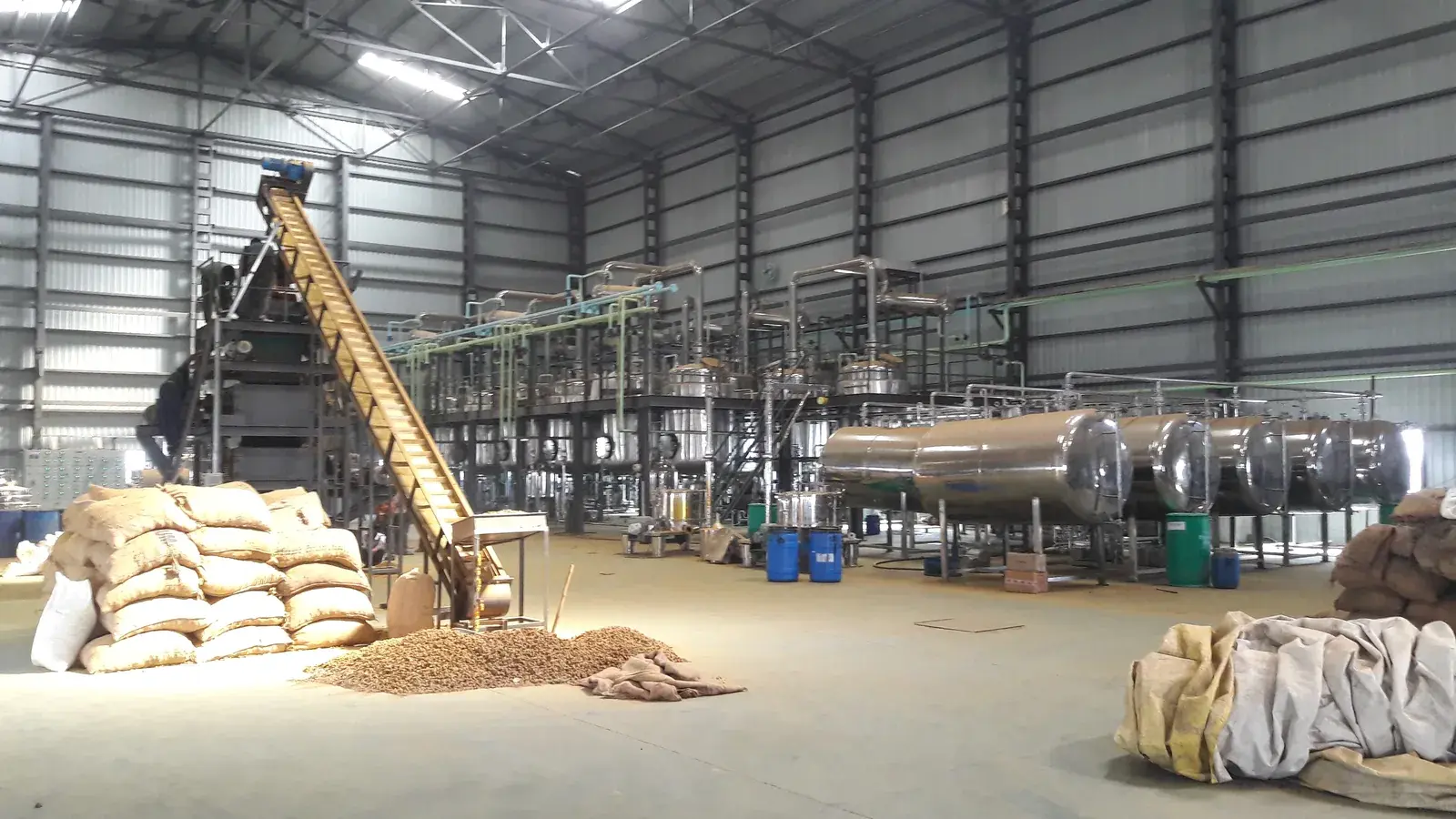
Mechotech designs and manufactures turnkey extraction plants that process coconut meal to recover coconut protein. We supply the machinery for the route selected after screening — raw-material preparation, extraction, separation, concentration or recovery, and drying or collection — configured to the target specification. Mechotech's technology screening identifies 2 candidate routes for coconut meal and coconut protein: 1 high-priority and 1 relevant screening fits, with Enzyme-Assisted Extraction (EAE) best-ranked (rank 35 of 100).
For coconut meal with coconut protein as the target, there are 2 candidate technologies: Subcritical Water Extraction (SWE) and Enzyme-Assisted Extraction (EAE). By route — Subcritical Water (SWE): relevant screening, rank 42 of 100, pressurized water; Enzyme-Assisted (EAE): high-priority screening, rank 35 of 100, water, enzyme and pH control. For the best-ranked route, Enzyme-Assisted (EAE), the screening flags: select cellulase/pectinase/protease by matrix; control enzyme cost and inactivation. These are screening candidates rather than guarantees: the final technology, operating parameters and plant configuration are established during process development and pilot validation. Product-contact parts are built in SS 316L with CIP-cleanable design, and automation is configured to the project.
Technical Specifications
| Product | Coconut Meal Protein Extract Plant |
|---|---|
| Feedstock | Coconut meal |
| Part / Feed Form | Meal |
| Target Extract | Coconut protein |
| Extraction Method | SWE, EAE |
| Technology Count | 2 |
| Product-contact Material | SS 316L, electropolished, CIP-cleanable |
| Automation | PLC-SCADA, configured to requirement |
Plant Capacities
| Plant Scale | Meal Throughput | Typical Use |
|---|---|---|
| Pilot | Configured to your feedstock and trial plan | Product development, parameter validation |
| Semi-Commercial | Configured to raw-material supply and buyer volume | Contract manufacturing, scale-up trials |
| Commercial | Configured to raw-material supply and confirmed buyer volume | Commercial production at confirmed buyer volume |
Capacity is configured to raw-material supply and confirmed buyer volume; we recommend a pilot plant to validate process parameters before scaling. No fixed throughput is quoted for this product.
Manufacturing Process
Each extraction method follows a different process — pick a method to see its steps.
Raw-Material Preparation
Coconut meal is cleaned and size-reduced so coconut protein can be reached by the extraction medium; particle size and moisture are set during process development.
Vessel Loading & Pressurisation
Prepared coconut meal and water are loaded into a pressure-rated extraction vessel.
Subcritical Water Extraction
Water held liquid under pressure at elevated temperature extracts coconut protein without an organic solvent; temperature and residence time are set to limit thermal degradation and hydrolysis.
Separation
Spent solids are separated by filtration or centrifugation and the extract is clarified before concentration.
Concentration
The clarified aqueous extract is concentrated under vacuum or by membrane systems where required; no organic solvent is used in this route.
Recovery, Standardisation & Drying
The coconut protein fraction is recovered from the concentrate by a route selected during process development and checked against the target specification; drying behaviour is verified because protein-type targets can be heat-sensitive.
Raw-Material Preparation
Coconut meal is cleaned and size-reduced so coconut protein can be reached by the extraction medium; particle size and moisture are set during process development.
Slurry & pH Control
Prepared coconut meal is slurried in water with pH and temperature set for the enzyme system.
Enzymatic Treatment
An enzyme (for example a cellulase, pectinase or protease, selected for the coconut meal matrix) breaks down bound cell-wall material to release coconut protein; enzyme cost and specificity are validated at pilot scale.
Enzyme Inactivation & Separation
The enzyme is inactivated and spent solids are separated by filtration or centrifugation.
Concentration
The clarified aqueous extract is concentrated under vacuum or by membrane systems where required; no organic solvent is used in this route.
Recovery, Standardisation & Drying
The coconut protein fraction is recovered from the concentrate by a route selected during process development and checked against the target specification; drying behaviour is verified because protein-type targets can be heat-sensitive.
Major Plant Equipment
- Raw-material cleaning and size-reduction system
- Pressure-rated hot-water extraction vessel
- High-pressure water pump and heat exchangers
- Jacketed enzyme reaction vessel with pH and temperature control
- Enzyme dosing and inactivation system
- Filtration / centrifugation system
- Vacuum evaporator
- Membrane concentration unit (where required)
- Dryer (where a dried form is specified)
- CIP (clean-in-place) system
- Storage and finished-product tanks
- PLC-SCADA control panel and instrumentation
Plant Output
Applications
- Plant-Based Milk
- Sports Nutrition
- Functional Foods
- Protein Powders
- Bakery Products
- Infant Nutrition
- Nutritional Beverages
- Clinical Nutrition
- Nutraceuticals
- Pharmaceutical Formulations
Key Features
Enzyme-Assisted (EAE) — High-Priority Screening Fit
Best-ranked route for coconut meal: rank 35 of 100 in Mechotech's enzyme-assisted extraction screening, using water, enzyme and pH control. Ranks are directional screening priorities, not measured yield, ROI or plant guarantees.
Coconut meal — 2 Candidate Routes
Routes screened for coconut meal: Subcritical Water (SWE) — relevant, rank 42; Enzyme-Assisted (EAE) — high-priority, rank 35. Each route has its own process tab above.
Meal Feed Form
The candidate routes are defined for coconut meal; feedstock assay and moisture are measured as pilot inputs and the feed form is set during process development.
Parameters Fixed After Pilot Trials
Recovery of coconut protein, selectivity, solvent or water duty, quality and cleaning are measured in pilot trials, starting with small-scale feed trials, before final plant parameters are fixed.
SS 316L Hygienic Construction
Product-contact surfaces are SS 316L and CIP-cleanable, in a hygienic design suited to food, nutraceutical and pharmaceutical supply chains; PLC-SCADA automation with recipe control can be configured to the project scope.
Frequently Asked Questions
What is a coconut meal extraction plant for coconut protein?
Which plant part or feed form does the coconut meal plant process?
Which extraction technologies are suitable for coconut meal?
How does Mechotech's screening rank the candidate routes for coconut meal?
How does the coconut meal extraction process work?
What equipment does the coconut meal extraction plant include?
What output and specification can the coconut meal plant deliver?
What application areas are listed for Coconut Meal Protein Extract?
Which related Mechotech extraction pages cover the same material or target?
What capacity is available and is a pilot trial recommended?
Ready to discuss your project?
Get a free quote and technical consultation from our engineering team.