Peanut
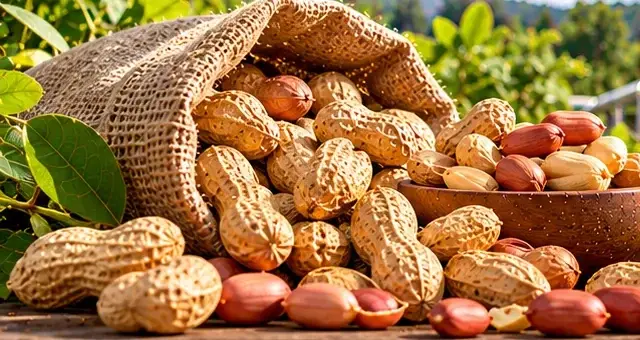
Peanut
Mechotech designs and manufactures turnkey protein extraction plants for Peanut (Arachis hypogaea). The product tree lists Peanut under Protein Extraction Plants, and the Sureka Life Sciences (SLS) catalogue lists Peanut Extract with protein as its offering grade. Mechotech’s published peanut case studies describe the verified routes for this raw material: a protein isolate plant (cold oil pressing, defatted-meal milling, protein extraction, solid–liquid separation, ultrafiltration and diafiltration, vacuum concentration and spray drying) and a protein hydrolysate plant (enzymatic hydrolysis, membrane purification, vacuum concentration and spray drying). The product form, grade and route are configured to the client’s target.
Mechotech’s Peanut plant is configured around the raw material and the target protein product. It is built in SS 316L with integrated membrane and concentration sections, automation and full documentation, and is delivered as a commissioned turnkey system. The route, the grade and the operating parameters are established during process development and pilot validation.
Technical Specifications
| Product | Peanut Protein Extraction Plant |
|---|---|
| Process Category | Protein Extraction Plants |
| Botanical Name | Arachis hypogaea (per the Sureka Life Sciences catalogue entry for Peanut Extract and Mechotech’s peanut case studies) |
| Raw Material | Peanut (groundnut): shelled kernels, blanched peanuts, cold-pressed cake or defatted meal, per the case studies |
| Plant Part / Feed Form | Kernel; whether the plant is fed kernels, press cake or defatted meal is confirmed with the client |
| Target Extract | Peanut protein: isolate, concentrate or hydrolysate, as configured to the project |
| Reference Grade (case study) | Mechotech’s peanut protein isolate case study lists a peanut protein isolate at 90–94%; this is a published project grade for the same raw material, not a specification of this page |
| Route (per the case studies) | Isolate: cold oil pressing, defatted-meal milling, protein extraction, solid–liquid separation, ultrafiltration and diafiltration, vacuum concentration, spray drying. Hydrolysate: slurry preparation, enzymatic hydrolysis, enzyme inactivation, ultrafiltration and nanofiltration, vacuum concentration, spray drying |
| Product-contact Material | SS 316L, electropolished, CIP-cleanable |
| Automation | PLC-SCADA, configured to requirement |
| Plant Capacity | Configured to requirement |
| Utility Requirements | Steam, chilled/cooling water, RO / process water, vacuum, compressed air and power (project-specific) |
| Compliance | GMP hygienic design; full documentation for qualification |
| Final Product Form | Peanut protein powder or liquid concentrate, per the project specification |
Plant Capacities
| Plant Scale | Raw Material Throughput | Typical Use |
|---|---|---|
| Pilot | Configured to your feedstock and trial plan | Product development, parameter validation |
| Semi-Commercial | Configured between pilot and commercial scale | Scale-up trials, contract manufacturing |
| Commercial | Configured to raw-material supply and confirmed buyer volume | Commercial production |
Capacity is configured to raw-material supply, confirmed buyer volume and investment timeline; a pilot plant is recommended to validate parameters before scaling.
Manufacturing Process
Raw Material Preparation
Peanut kernels are cleaned, graded and destoned and, where the plant starts from whole kernels, dehulled, blanched and sorted; plants fed with cold-pressed cake or defatted meal start at milling.
Oil Removal (where required)
Where the feed is not already defatted, cold mechanical pressing recovers the oil and leaves a protein-rich cake, as in Mechotech’s peanut protein isolate case study.
Defatted Meal Milling
The defatted material is milled to a uniform size ready for protein extraction.
Protein Extraction
Protein is extracted from the milled meal under controlled conditions, and the solids are separated from the protein solution. The extraction medium and conditions are set during process development.
Membrane Purification
Where a higher-protein product is targeted, the protein solution is purified by ultrafiltration and diafiltration, or for hydrolysate products by ultrafiltration and nanofiltration after enzymatic hydrolysis.
Vacuum Concentration
The purified protein stream is concentrated under vacuum at low temperature.
Spray Drying & Finishing
The concentrate is spray-dried to a powder, cooled and sieved where a powder is required, then released after assay, microbial and moisture testing.
Major Plant Equipment
- Raw material cleaning, destoning and grading system
- Dehuller and blanching system (where kernels are the feed)
- Cold oil press (where the feed is not defatted)
- Fine grinding system
- Slurry preparation tanks
- Protein extraction reactors
- Decanter centrifuge
- Ultrafiltration and diafiltration system
- Vacuum concentrator
- Spray dryer with fluid-bed cooler
- Sifting and packing line
- CIP (clean-in-place) system
- PLC-SCADA control panel and instrumentation
Plant Output
Case Study
Peanut (Groundnut) Protein Isolate (PPI) Manufacturing Plant
See how this plant was engineered and delivered for a real project.
From Plant to Product
Peanut Extract
This botanical is also in the product range of Sureka Life Sciences, our sister concern in botanical ingredients.
Applications
- Sports Nutrition
- Plant-Based Milk
- Protein Powders
- Functional Foods
- Bakery Products
- Confectionery
- Nutritional Beverages
- Clinical Nutrition
- Nutraceuticals
- Pharmaceutical Formulations
Key Features
Case-Study-Based Route
The route follows Mechotech’s published peanut protein isolate and hydrolysate case studies for the same raw material.
Membrane Purification
Ultrafiltration, diafiltration and nanofiltration sections can be configured where the target product needs purification.
Isolate or Hydrolysate
The plant can be configured for a protein isolate or concentrate, or for an enzymatic hydrolysate, depending on the product.
SS 316L Hygienic Construction
Electropolished SS 316L product-contact surfaces with CIP operation between batches.
Scalable Capacity
Plants are configured to requirement from pilot scale upward, with modular expansion.
Frequently Asked Questions
Does Mechotech supply the complete machinery for Peanut protein extraction?
What specification can the Peanut protein plant achieve?
What production capacities are available for the Peanut plant?
Which raw material and plant part does the Peanut plant process?
How is peanut protein produced in the plant?
What is the difference between the peanut protein isolate and hydrolysate routes?
Which application areas are listed for peanut protein?
Is the peanut protein route the same as a CO₂ route for peanut skins and kernels?
Which related peanut and protein pages does Mechotech list?
Ready to discuss your project?
Get a free quote and technical consultation from our engineering team.