Tilia Flower Extract Powder
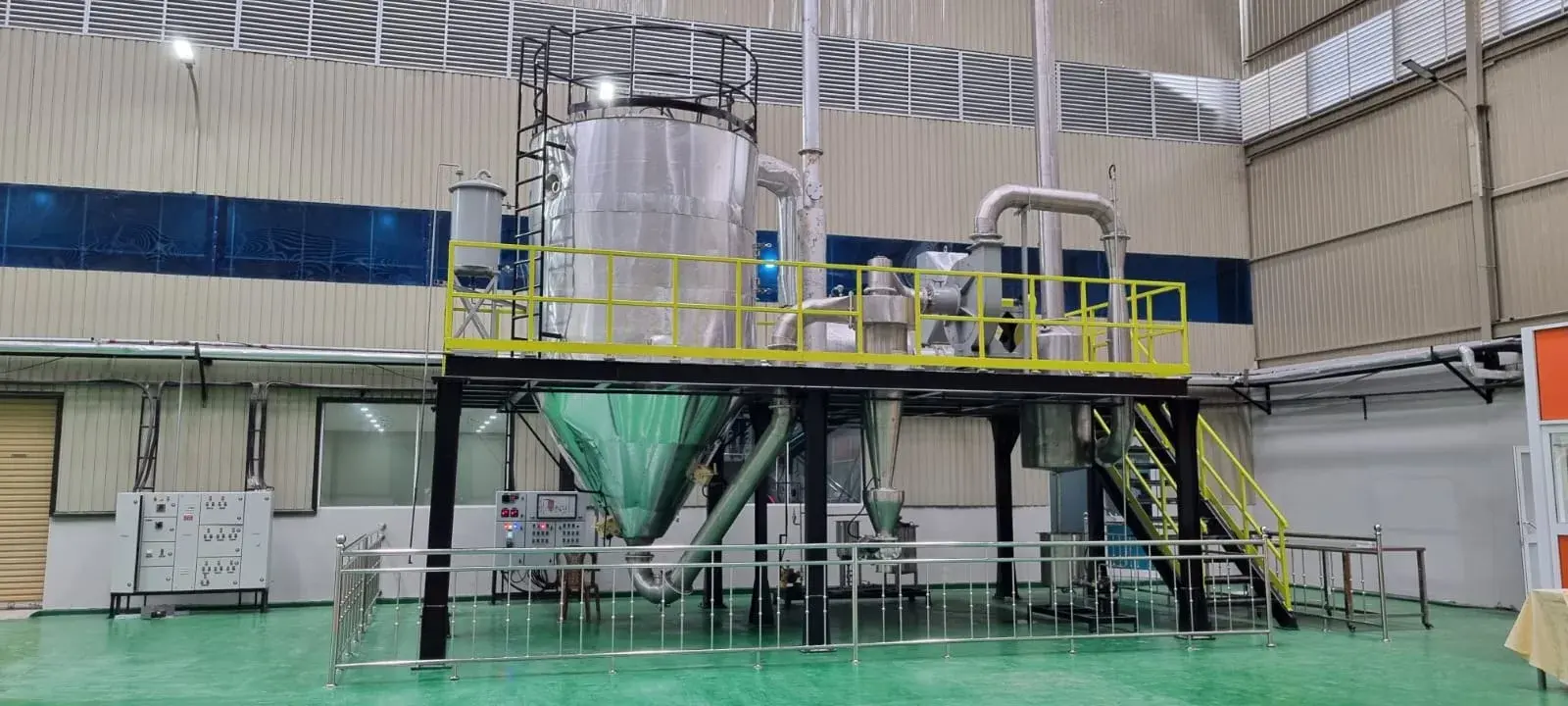
Tilia Flower Extract Powder
Purity Levels
5% Flavones by HPLC
Mechotech designs and manufactures turnkey extraction plants for Tilia flower (Linden, Tilia cordata and Tilia platyphyllos), processing the dried flower into an extract standardised to Flavones by HPLC — flavonoid glycosides such as tiliroside that are well-documented constituents of Linden blossom and the basis of its long-established traditional European use as a calming, relaxation-associated botanical, framed here under neutral structure/function positioning rather than medical claims. We supply the complete machinery — flower cleaning, milling, aqueous-ethanol extraction, filtration, purification, vacuum concentration, closed-loop solvent recovery, HPLC standardisation and spray drying — to convert Tilia flower into a consistent 5% flavones powder for the nutraceutical and functional-beverage/tea industries.
Mechotech's Tilia flower plant is engineered around the chemistry of Linden blossom's flavonoid fraction — principally flavone glycosides including tiliroside — which is concentrated in the flower rather than the leaf or bark, and which has supported Tilia's centuries-long traditional use across European herbal medicine and, more recently, its adoption in functional-beverage and tea-industry formulation. Tilia flower demands a different raw-material handling regime than the leaf, root, or bark material that dominates most botanical extraction lines: the blossom and its pale, papery bract are harvested over a short seasonal window and must be dried promptly at low temperature, since the same delicate petal structure that makes the flower easy to over-dry or scorch also makes its flavone glycosides more susceptible to heat and oxidative loss than the tougher, more heat-stable compound classes typical of root or bark material. That sensitivity carries through the whole process — extraction and concentration both run at controlled, moderate-to-low temperature to protect the flavone glycosides, and the milling stage is tuned to avoid excessive fines that would otherwise complicate downstream filtration of the fragile petal and bract tissue. Built in SS 316L with electropolished product-contact surfaces, PLC-SCADA automation and full batch documentation, each plant is delivered as a commissioned turnkey system engineered to the declared 5% Flavones by HPLC specification.
Technical Specifications
| Product | Tilia Flower Extract Powder Extraction Plant |
|---|---|
| Botanical Name | Tilia cordata / Tilia platyphyllos (Linden) |
| Raw Material | Dried Tilia flower (Linden blossom, including bract) |
| Plant Part | Flower |
| Extract Type | Standardised dry extract (spray-dried powder) |
| Standardisation | Flavones by HPLC — 5% |
| Extraction Method | Low-temperature aqueous-ethanol extraction (closed, jacketed SS 316L extractors) |
| Product-contact Material | SS 316L, electropolished, CIP-cleanable |
| Filtration System | Plate-and-frame filter press with 1–5 micron cartridge polish filtration |
| Purification System | Macroporous resin / membrane purification for flavone enrichment |
| Concentration System | Falling-film / vacuum evaporator with closed-loop solvent recovery |
| Drying System | Spray dryer, controlled inlet/outlet temperature |
| Automation | PLC-SCADA with recipe management, batch traceability and production reporting |
| Plant Capacity | Configured to requirement |
| Utility Requirements | Steam, chilled/cooling water, compressed air, soft water, power (project-specific) |
| Compliance | GMP, FSSAI, HACCP hygienic design; full documentation for qualification |
| Final Product Form | Free-flowing standardised extract powder |
Plant Capacities
| Plant Scale | Flower Throughput | Typical Use |
|---|---|---|
| Pilot | Configured to your feedstock and trial plan | Product development, flavone-recovery validation |
| Semi-Commercial | Configured between pilot and commercial scale | Contract manufacturing, scale-up trials |
| Commercial | Configured to raw-material supply and confirmed buyer volume | Export-grade continuous production |
Capacity is configured to raw-material supply and confirmed buyer volume; we recommend a pilot plant to validate flavone recovery and HPLC-assay repeatability before scaling, since floral raw material quality varies with harvest season and drying method.
Manufacturing Process
Flower Cleaning & Size Reduction
Dried Tilia flower (Linden blossom and bract) is authenticated, cleaned of stem and foreign matter, tested for moisture, and gently milled to a controlled particle size that opens the delicate floral tissue without generating excessive fines that complicate later filtration.
Low-Temperature Aqueous-Ethanol Extraction
Milled flower material is charged into closed, jacketed SS 316L extractors and extracted with aqueous ethanol under controlled, moderate temperature and multiple cycles to maximise flavone glycoside recovery while protecting the compound class from thermal degradation.
Filtration
The extract (miscella) is clarified through a plate-and-frame filter press followed by 1–5 micron cartridge polish filters to remove fine floral particulate before concentration.
Purification & Vacuum Concentration
The extract passes a macroporous resin purification stage to enrich the flavone fraction, then is concentrated in a falling-film evaporator under vacuum at controlled low temperature with closed-loop ethanol recovery.
Solvent Recovery
A closed-loop recovery system condenses, purifies and recycles the recovered ethanol back into production.
HPLC Standardisation
The concentrate is assayed by HPLC for total flavone content (including tiliroside) and blended or carrier-adjusted to the declared 5% specification before drying.
Spray Drying & Quality Control
The standardised concentrate is spray-dried to a free-flowing powder with controlled inlet/outlet temperature to preserve the flavone fraction. Each batch undergoes HPLC assay, residual-solvent, heavy-metal, microbial, and moisture testing before release with full certificate-of-analysis documentation.
Major Plant Equipment
- Flower cleaning system
- Low-shear mill (controlled size reduction for floral material)
- Stainless-steel jacketed aqueous-ethanol extraction vessels (SS 316L)
- Solvent storage tanks
- Solvent transfer pumps
- Plate-and-frame filter press / pressure leaf filter
- Cartridge polish filters
- Macroporous resin purification column
- Falling-film / multi-stage vacuum evaporator
- Closed-loop solvent recovery system
- Condensers & vacuum pumps
- HPLC quality-control laboratory setup
- Spray dryer
- CIP (clean-in-place) system
- PLC-SCADA control panel, electrical MCC & instrumentation
Plant Output
Applications
- Functional-beverage and tea-industry ingredient supply (calming-category positioning, structure/function)
- Nutraceutical capsule, tablet, and supplement manufacturing
- Relaxation and sleep-support botanical blend formulations
- Traditional European herbal preparation manufacturing
- Cosmetic and personal-care active ingredient supply
- Export to nutraceutical ingredient buyers in regulated markets
Key Features
GMP Hygienic SS 316L Construction
All product-contact surfaces are electropolished SS 316L, using GMP hygienic design for botanical extract manufacturing, with CIP operation between batches.
Standardised 5% Assay by HPLC
In-process and batch-release HPLC assay are used to check the finished powder against its declared 5% flavones specification, including the marker glycoside tiliroside, for consistent, buyer-ready quality.
Low-Temperature Processing for Delicate Floral Material
Extraction and concentration both run at controlled, moderate-to-low temperature specifically to protect Linden's flavone glycosides from thermal and oxidative degradation.
Closed-Loop Solvent Recovery
Integrated condenser-distillation recovery returns ethanol for reuse each batch, reducing fresh-solvent consumption.
Integrated Spray Drying
A matched spray dryer converts the standardised concentrate into a free-flowing, low-moisture powder ready for encapsulation, tea-blend formulation and functional-beverage use.
Scalable Batch Capacity
Plants are configured to requirement from pilot scale upward, with a modular design that allows expansion without replacing core equipment.
Frequently Asked Questions
What is Tilia flower extract powder and why is it commercially extracted?
Does Mechotech supply the machinery for Tilia flower extract powder?
Which plant part of Tilia is used, and why does that matter for processing?
Why does extraction and concentration run at low temperature for this product?
Why is tiliroside assayed by HPLC rather than a UV method?
What is the primary commercial application for Tilia flower extract powder?
Is Tilia flower extract marketed with medical claims?
What testing method confirms the Tilia flower extract powder specification?
What production capacities are available for the Tilia flower extract powder plant?
What is the typical cost and delivery timeline for a Tilia flower extraction plant?
Ready to discuss your project?
Get a free quote and technical consultation from our engineering team.