Stamens - Saffron
Stamens - Saffron
Mechotech designs and manufactures turnkey natural colour extraction plants for saffron. In the Mechotech catalogue, Stamens - Saffron is listed in the Yellow Colour group alongside leaf, marigold and goldenrod, St. John’s wort, turmeric, Osage orange, brown onion skin and annatto entries. According to Mechotech’s article on yellow colour extraction from saffron stamens, saffron is harvested from the flower of Crocus sativus and its colour comes from crocin, an unusual water-soluble carotenoid that dissolves into water or mild alcohol to a saturated yellow-orange; crocin is the glycoside of crocetin, and the article names picrocrocin (bitterness) and safranal (aroma) as the companion compounds that define saffron quality. The catalogue says ‘Stamens’, the article describes dried saffron threads, and Mechotech’s legacy herbal page describes dried stigmas, so the exact plant part is confirmed with the client.
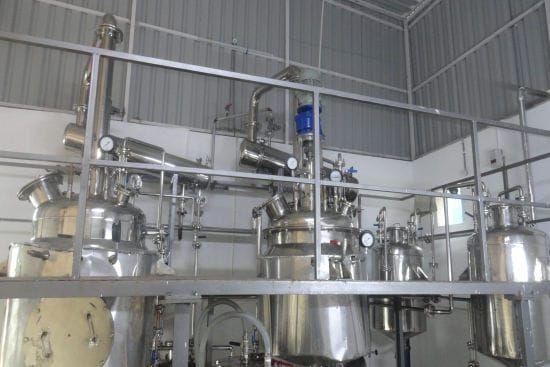
Mechotech’s Stamens - Saffron plant is configured around the raw material and the target colour extract. It is built in SS 316L with integrated automation and full documentation, and is delivered as a commissioned turnkey system. The article describes a gentle aqueous route: graded threads steeped in cool or gently warmed water, or in dilute food-grade alcohol, with repeated steeping, concentration under gentle vacuum at low temperature, optional spray or freeze drying, and standardisation to a declared colouring strength by spectrophotometry, with light and oxygen excluded because crocin is sensitive to heat, light and oxygen. The route and conditions for a given project are established during process development and pilot validation.
Technical Specifications
| Product | Stamens - Saffron Natural Colour Extraction Plant |
|---|---|
| Raw Material | Saffron (catalogue name: Stamens - Saffron) |
| Botanical Name | Crocus sativus (per Mechotech’s article and legacy herbal page) |
| Plant Part / Feed Form | Dried saffron threads, graded, with the deep-red tips carrying the most crocin (per the article); the catalogue says ‘Stamens’ and the legacy herbal page says stigmas, so the exact part is confirmed with the client |
| Colour Group | Yellow Colour (see the Yellow Colour page) |
| Colour-forming Components | Crocin (water-soluble carotenoid, glycoside of crocetin) for the yellow-orange colour, with picrocrocin (bitterness) and safranal (aroma) as companion compounds; sensitive to heat, light and oxygen (per the article) |
| Process Category | Natural Colour Extraction Plants |
| Extract Type | Water-soluble saffron colour extract (liquid concentrate or dried powder, per specification) |
| Extraction Method | Aqueous (cool or gently warmed water) or dilute food-grade alcohol steeping, with repeated steeping, in closed vessels with light and oxygen excluded (per the article), SS 316L product-contact; route confirmed during process development |
| Product-contact Material | SS 316L |
| Filtration System | Plate-and-frame filter press with cartridge polish filters, or finer filtration, as the extract requires |
| Concentration System | Low-temperature vacuum evaporator |
| Drying System | Spray or freeze dryer, where a powder is required |
| Automation | PLC-based |
| Plant Capacity | Configured to requirement |
| Utility Requirements | Chilled/cooling water, vacuum, compressed air and power (project-specific) |
| Compliance | GMP hygienic design; full documentation for qualification |
| Final Product Form | Natural colour extract (yellow colour group) |
Plant Capacities
| Plant Scale | Raw Material Throughput | Typical Use |
|---|---|---|
| Pilot | Configured to your feedstock and trial plan | Product development, parameter validation |
| Semi-Commercial | Configured between pilot and commercial scale | Scale-up trials, contract manufacturing |
| Commercial | Configured to raw-material supply and confirmed buyer volume | Commercial production |
Capacity is configured to raw-material supply, confirmed buyer volume and investment timeline; a pilot plant is recommended to validate parameters before scaling.
Manufacturing Process
Sorting and Grading
Dried saffron threads are graded, with the deep-red tips carrying the most crocin; the article stresses careful selection and gentle drying because bruising, excess heat and light exposure degrade the pigment, and notes that incoming crocin content is verified because of the raw material’s cost.
Extraction
The threads are steeped in cool or gently warmed water, or in dilute food-grade alcohol, which dissolves crocin quickly into an intense golden-yellow liquor. According to the article, low temperature and short contact time protect the pigment and its companion aroma compounds, and repeated steeping draws out remaining colour before the spent threads are separated; the conditions are set during process development.
Filtration
The liquor is separated from the spent threads and clarified through filtration suited to a delicate aqueous extract.
Concentration & Solvent Recovery
The coloured liquor is concentrated under gentle vacuum at low temperature, which the article says is essential to retain both crocin colour and safranal aroma. Solvent recovery applies only where dilute alcohol is used.
Standardisation
The extract is standardised to a declared colouring strength by spectrophotometric measurement of crocin (the article gives measurement near 440 nm), with picrocrocin near 257 nm and safranal near 330 nm as the companion markers.
Drying & Quality Control
The standardised extract is supplied as a liquid concentrate or spray- or freeze-dried to a water-soluble colour powder, then released after testing for colouring strength, purity, authenticity and microbial quality; the article stresses authenticity verification as a critical release step because saffron is a frequent target of adulteration.
Major Plant Equipment
- Thread grading and moisture-testing station
- Closed low-temperature SS 316L extraction vessels (light and oxygen excluded)
- Dilute-alcohol storage and recovery (where alcohol is used)
- Filtration (plate-and-frame filter press and cartridge polish filters)
- Low-temperature vacuum evaporator
- Standardisation / blending vessel
- Spray dryer or freeze dryer
- Spectrophotometric and authenticity testing
- CIP system
- Automation and instrumentation
Plant Output
Applications
- Premium natural food and beverage colour for rice dishes, dairy, confectionery, bakery and beverages, with saffron aroma and flavour (per the article)
- Direct colouring of aqueous foods without solvents or emulsifiers, because crocin is water-soluble (per the article)
- Nutraceutical and cosmetic use of saffron extract (per the article)
- Authenticated, premium-positioned saffron colour supply (per the article)
Key Features
SS 316L Construction
Electropolished SS 316L product-contact surfaces with CIP operation between batches.
Water-Soluble Carotenoid Route
Crocin is a glycoside, so the article describes colouring aqueous foods directly; the plant is built around gentle aqueous or mild-alcohol extraction.
Low-Temperature, Light- and Oxygen-Excluded Processing
Closed handling, low-temperature vacuum concentration and gentle drying protect crocin and safranal, as the article describes.
Standardised on Colouring Strength
The extract is standardised by spectrophotometric measurement of crocin colouring strength and tested for purity and authenticity.
Efficient Recovery from a Small, Costly Feed
Because the raw material is exceptionally costly, the article stresses efficient recovery from a very small feedstock mass; the recovery for a project is established in trials.
Scalable Batch Capacity
Plants are configured to requirement from pilot scale upward, with modular expansion.
Frequently Asked Questions
Does Mechotech supply the complete machinery for Stamens - Saffron?
What specification can the Stamens - Saffron plant achieve?
What production capacities are available for the Stamens - Saffron plant?
Which industries use the Stamens - Saffron plant?
Which part of saffron is processed?
What makes saffron’s colour pigment unusual?
Why is saffron extracted at low temperature?
Why is authenticity testing part of the process?
How does this page differ from the other saffron pages?
Where does this page sit in the yellow colour range?
Ready to discuss your project?
Get a free quote and technical consultation from our engineering team.