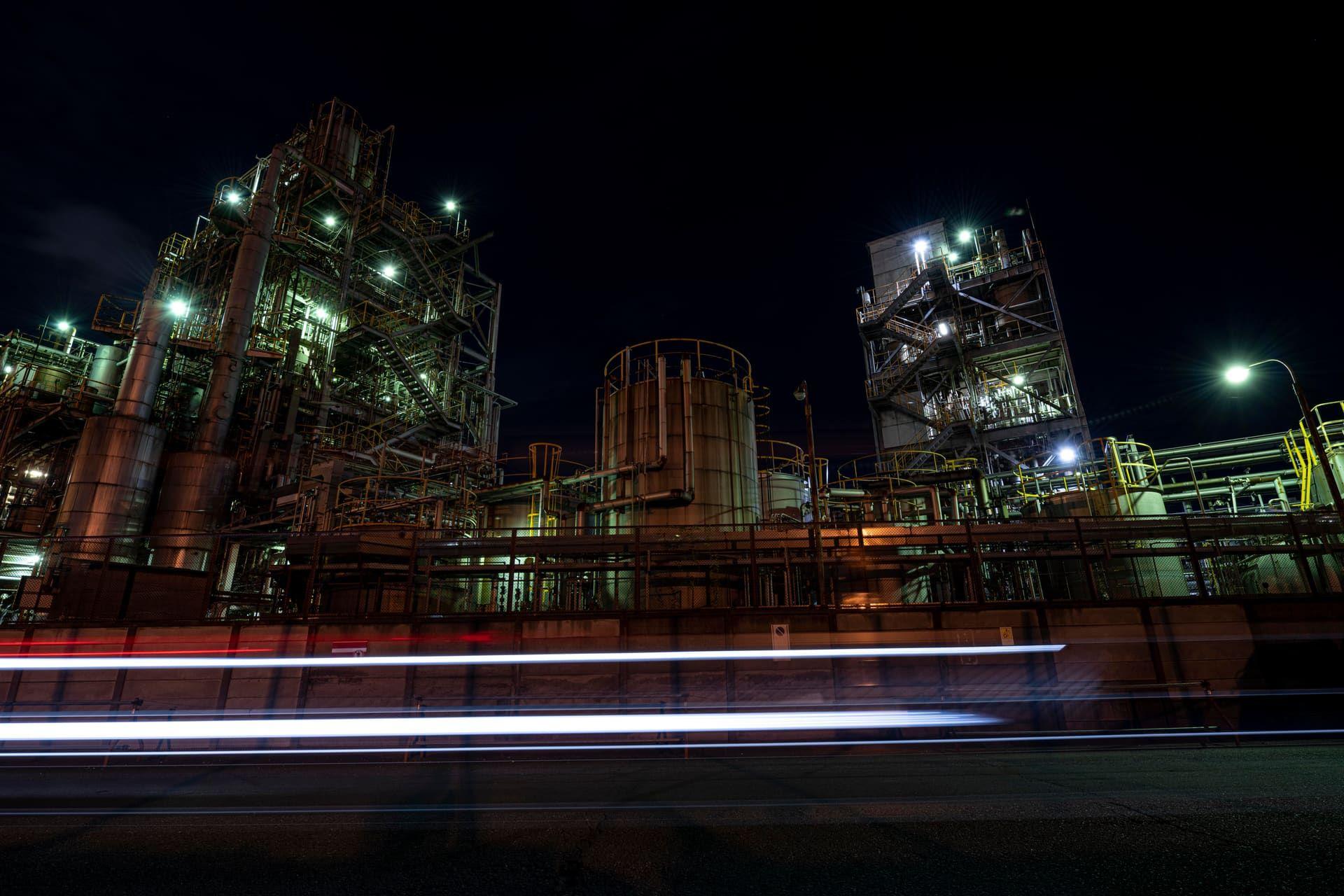
Vegetables - Raddish / Red Cabbage / Strawberry / Beetroot
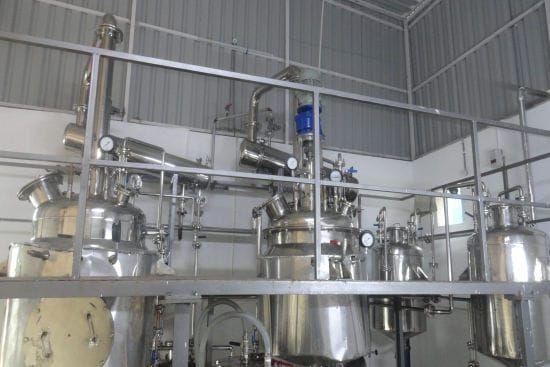
Vegetables - Raddish / Red Cabbage / Strawberry / Beetroot
Mechotech designs and manufactures turnkey natural colour extraction plants for red vegetable and fruit colour. In the Mechotech catalogue, Vegetables - Raddish / Red Cabbage / Strawberry / Beetroot is listed in the Red Colour group alongside hibiscus, avocado, madder, sumac, Brazil wood, St. John’s wort and sycamore entries. Mechotech’s article on red colour extraction describes three pigment families behind natural reds: anthocyanins (from berries, red cabbage and purple carrot), betalains (from beetroot and prickly pear) and carotenoids, each needing its own solvent, pH and temperature regime. The article does not describe radish or strawberry by name, so their pigment and part are confirmed with the client; red cabbage and beetroot, and berries in general, are covered. The entry lists four raw materials, so the feed and the target shade are confirmed before the plant is configured.
Mechotech’s red vegetables plant is configured around the raw material and the target colour extract. It is built in SS 316L with integrated solvent recovery, automation and full documentation, and is delivered as a commissioned turnkey system. The article describes acidified water or ethanol extraction at about 40 to 60 degrees Celsius for anthocyanin sources, gentle aqueous extraction at 20 to 50 degrees Celsius for betalain sources such as beetroot, vacuum concentration, and spray drying with a carrier, standardised on pigment content. The raw material, solvent and conditions for a project are established during process development and pilot validation.
Technical Specifications
| Product | Vegetables - Raddish / Red Cabbage / Strawberry / Beetroot Natural Colour Extraction Plant |
|---|---|
| Raw Material | Radish, red cabbage, strawberry and beetroot (catalogue name: Vegetables - Raddish / Red Cabbage / Strawberry / Beetroot) |
| Botanical Name | Not stated in the product tree; the article names the vegetables and fruits by common name only |
| Plant Part / Feed Form | Not stated for radish or strawberry in any source; red cabbage and beetroot as the article describes them (beetroot as the source of betanin); the exact feed and form are confirmed with the client |
| Colour Group | Red Colour (see the Red Colour page) |
| Colour-forming Components | Anthocyanins (red cabbage and berries) and betalains (beetroot, betanin) per Mechotech’s article; the pigment of radish and strawberry is not stated and is confirmed with the client |
| Process Category | Natural Colour Extraction Plants |
| Extract Type | Natural colour extract (liquid concentrate or dried powder, per specification) |
| Extraction Method | Acidified water or ethanol extraction for anthocyanins and gentle aqueous extraction for betalains, in closed jacketed SS 316L vessels (per the article); route confirmed during process development |
| Product-contact Material | SS 316L |
| Filtration System | Plate-and-frame filter press with cartridge polish filters |
| Concentration System | Falling-film / vacuum evaporator with solvent recovery where a solvent is used |
| Drying System | Spray or vacuum dryer, where a powder is required |
| Automation | PLC-based |
| Plant Capacity | Configured to requirement |
| Utility Requirements | Steam, chilled/cooling water, compressed air and power (project-specific) |
| Compliance | GMP hygienic design; full documentation for qualification |
| Final Product Form | Natural colour extract (red colour group) |
Plant Capacities
| Plant Scale | Raw Material Throughput | Typical Use |
|---|---|---|
| Pilot | Configured to your feedstock and trial plan | Product development, parameter validation |
| Semi-Commercial | Configured between pilot and commercial scale | Scale-up trials, contract manufacturing |
| Commercial | Configured to raw-material supply and confirmed buyer volume | Commercial production |
Capacity is configured to raw-material supply, confirmed buyer volume and investment timeline; a pilot plant is recommended to validate parameters before scaling.
Manufacturing Process
Raw Material Preparation
The chosen raw material is authenticated, cleaned, tested for moisture and chopped, pulped or macerated so the solvent can reach the tissue; the article stresses classifying the raw material by its pigment class first, because the wrong solvent leaves most of the pigment in the marc.
Extraction
For anthocyanin sources the article describes water or ethanol acidified with citric acid, at about 40 to 60 degrees Celsius to protect the heat-sensitive pigment; for beetroot it describes gentle aqueous extraction at 20 to 50 degrees Celsius to preserve heat-labile betanin. The route and conditions for the chosen material are set during process development.
Filtration
The extract is clarified through a plate-and-frame filter press and cartridge polish filters.
Concentration & Solvent Recovery
The article describes vacuum concentration, below 60 degrees Celsius for the betalain route, in a falling-film / vacuum evaporator, with solvent recovered through the condenser return system where ethanol is used.
Standardisation
The article says a natural red is sold by colour strength: anthocyanin colours are standardised on pigment content measured by the pH-differential spectrophotometric method at around 520 nanometres (E163), and betalain products on betanin content (E162); blending of sources to a target hue is routine.
Drying & Quality Control
The standardised extract is supplied as a liquid or spray-dried, with maltodextrin or gum arabic where encapsulation is wanted, then released after assay, residual-solvent (where ethanol is used), heavy-metal, microbial and moisture testing.
Major Plant Equipment
- Raw material cleaning, chopping and pulping system
- Closed jacketed SS 316L extraction vessels
- Acid dosing and pH-control system
- Solvent storage tanks (ethanol, where used)
- Plate-and-frame filter press
- Cartridge polish filtration
- Falling-film / vacuum evaporator
- Solvent recovery unit and condensers
- Standardisation / blending vessel
- Spray dryer
- CIP system
- Automation and instrumentation
Plant Output
Applications
- Anthocyanin colour for acidic products such as fruit drinks, carbonated beverages, jellies, confectionery and dairy desserts (per the article)
- Beetroot red for ice cream, yoghurt, meat substitutes and low-acid bakery fillings, usable from pH 3 to 7 (per the article)
- Natural tints in cosmetics and personal care (per the article)
- Clean-label replacement of synthetic reds (per the article)
Key Features
SS 316L Construction
Electropolished SS 316L product-contact surfaces with CIP operation between batches.
Pigment-Class Routes
The article describes separate routes for anthocyanins and betalains, so the plant is configured to the pigment of the chosen raw material rather than to one fixed solvent.
Gentle Temperatures
The article gives low extraction temperatures and vacuum concentration below 60 degrees Celsius for the heat-labile betalains.
Standardised on Colour Strength
Colour strength is standardised on pigment content, with blending to a target hue, as the article describes.
Scalable Batch Capacity
Plants are configured to requirement from pilot scale upward, with modular expansion.
Frequently Asked Questions
Does Mechotech supply the complete machinery for Vegetables - Raddish / Red Cabbage / Strawberry / Beetroot?
What specification can the Vegetables - Raddish / Red Cabbage / Strawberry / Beetroot plant achieve?
What production capacities are available for the Vegetables - Raddish / Red Cabbage / Strawberry / Beetroot plant?
Which industries use the Vegetables - Raddish / Red Cabbage / Strawberry / Beetroot plant?
Which raw materials and which parts are covered?
What gives natural red its colour?
Why does the solvent depend on the pigment?
Why does a natural red sometimes turn blue or purple in food?
How is the colour strength of a natural red measured?
How does this page differ from the other beetroot, radish and strawberry pages?
Where does this page sit in the Red Colour range?
Ready to discuss your project?
Get a free quote and technical consultation from our engineering team.