
Cinnamon (Leaves)
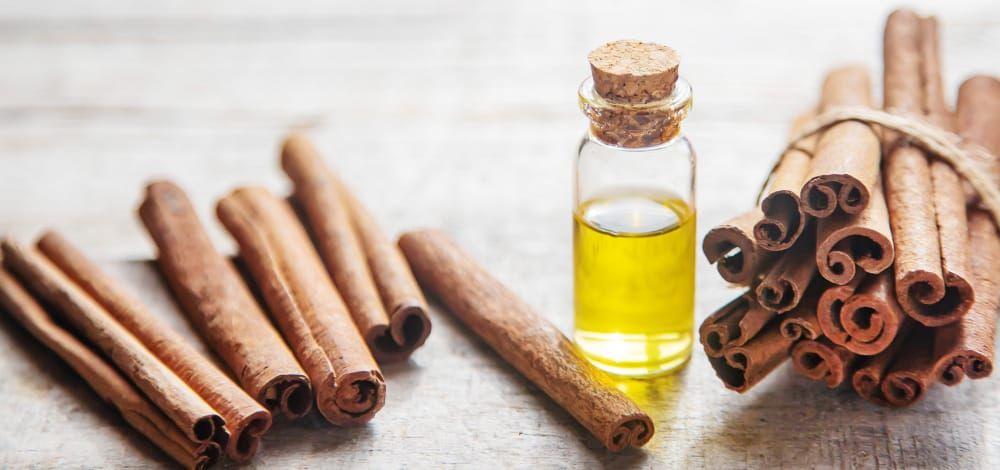
Cinnamon (Leaves)
Mechotech designs and manufactures turnkey leaves oils distillation plants for Cinnamon Leaf. Cinnamon leaf oil is dominated by eugenol (typically 70–90%), a clove-like, medicinal-character marker compound that is more abundant and lower-priced than bark oil, serving fragrance, flavour, and eugenol-derived downstream chemistry markets. As a cinnamon leaf oil extraction plant manufacturer, we supply the complete machinery — steam distillation being the extraction method used — to process Cinnamon leaf into an essential oil configured to the client’s target specification for the pharmaceutical, nutraceutical, food, and fragrance industries. The case study linked on this page describes a cinnamon bark and leaf steam-distillation plant.
Mechotech's Cinnamon plant is configured around the specific chemistry and processing requirements of Cinnamon leaf oil. Built in SS 316L with integrated condensers and oil-water separation, automation, and full documentation, each plant is delivered as a commissioned turnkey system.
Technical Specifications
| Product | Cinnamon Distillation Plant |
|---|---|
| Raw Material | Cinnamon |
| Botanical Name | Cinnamomum verum (per the Sureka Life Sciences catalogue entry for Cinnamon Leaves Distillation; the Mechotech cinnamon case study lists Cinnamomum verum / Cinnamomum cassia) |
| Plant Part | Leaves |
| Marker Compound | Eugenol, typically 70–90% in cinnamon leaf oil (per Mechotech’s cinnamon distillation article) |
| Product Category | Leaves Oils Distillation Plants |
| Extraction Method | Steam, hydro, vacuum or pressure distillation — selected for the volatility and heat-sensitivity of the target oil |
| Product-contact Material | SS 316L |
| Condensation | Multi-tube condenser with chilled-water circulation |
| Oil–Water Separation | Stainless-steel Florentine flask |
| Finishing | Polish filtration; drying over anhydrous sodium sulphate or by vacuum |
| Automation | PLC-based |
| Plant Capacity | Configured to requirement |
| Final Product Form | Cinnamon essential oil; aromatic hydrosol as co-product |
Plant Capacities
| Plant Scale | Raw Material Throughput | Typical Use |
|---|---|---|
| Pilot | Configured to your feedstock and trial plan | Product development, parameter validation |
| Semi-Commercial | Configured between pilot and commercial scale | Scale-up trials, contract manufacturing |
| Commercial | Configured to raw-material supply and confirmed buyer volume | Commercial production |
Capacity is configured to raw-material supply, confirmed buyer volume and investment timeline; a pilot plant is recommended to validate parameters before scaling.
Manufacturing Process
Raw Material Preparation
Cinnamon raw material is cleaned, sorted, and (where required) comminuted to the optimal particle size to maximise oil release during distillation.
Charging & Distillation
The prepared Cinnamon charge is loaded into the SS 316L still and distilled by steam, hydro, vacuum, or pressure distillation — selected for the volatility and heat-sensitivity of the target oil.
Condensation
Vapours pass through an efficient multi-tube condenser with chilled-water circulation, condensing the volatile oil and hydrosol.
Oil–Water Separation
Condensate is separated in a stainless-steel Florentine flask; the essential oil is collected while the hydrosol is drawn off (and can be recovered as a co-product).
Polishing & Drying
The crude oil is polish-filtered and dried over anhydrous sodium sulphate (or by vacuum) to remove residual moisture.
Quality Control
Batch quality is checked by gas chromatography against the eugenol marker and the agreed specification, together with physical parameters (specific gravity, refractive index, optical rotation), before release.
Major Plant Equipment
- Raw material cleaning and sorting system
- Size-reduction unit (where required)
- SS 316L distillation still / extractor
- Multi-tube condenser with chilled-water circulation
- Stainless-steel Florentine flask (oil–water separator)
- Polish filtration system
- Drying unit (anhydrous sodium sulphate or vacuum)
- CIP system
- PLC-based automation and instrumentation
Plant Output
Case Study
Cinnamon Essential Oil Distillation Plant
See how this plant was engineered and delivered for a real project.
From Plant to Product
Cinnamon Leaves Distillation
This botanical is also in the product range of Sureka Life Sciences, our sister concern in botanical ingredients.
Applications
- Fragrance and flavour oils
- Eugenol feedstock for isolation and downstream aroma-chemical synthesis
- Antimicrobial, antifungal and oral-hygiene care formulations
- Aromatherapy and stress-relief products
- Food preservation and natural bio-pesticide use
Key Features
SS 316L Construction
All product-contact surfaces are SS 316L for corrosion resistance and product purity, with CIP capability between batches.
Efficient Condensation
High-surface-area multi-tube condensers with chilled-water circulation condense the volatile oil and hydrosol.
Steam / Hydro / Vacuum / Pressure Extraction
The still — the core extraction equipment — is configured for the distillation mode best suited to the feedstock, protecting heat-sensitive aroma compounds.
Hydrosol Recovery
Integrated separation allows the aromatic hydrosol to be recovered as a co-product.
Scalable Capacity
Plants are configured to requirement from pilot scale upward, with modular expansion.
Frequently Asked Questions
Does Mechotech supply the complete machinery for Cinnamon?
What specification can the Cinnamon plant achieve?
What production capacities are available for the Cinnamon plant?
Which industries use the Cinnamon plant?
What is the difference between cinnamon leaf oil and cinnamon bark oil?
Who supplies cinnamon leaf oil extraction plants and equipment?
Which part of Cinnamon is processed in the distillation plant?
How is Cinnamon oil produced in the plant?
Does Mechotech list other routes or related plants for Cinnamon?
Is there a Mechotech case study for a cinnamon distillation plant?
Ready to discuss your project?
Get a free quote and technical consultation from our engineering team.