Stevia rebaudiana
Stevia rebaudiana
Purity Levels
Stevioside 90% and Rebaudioside 60%
Extraction Technologies
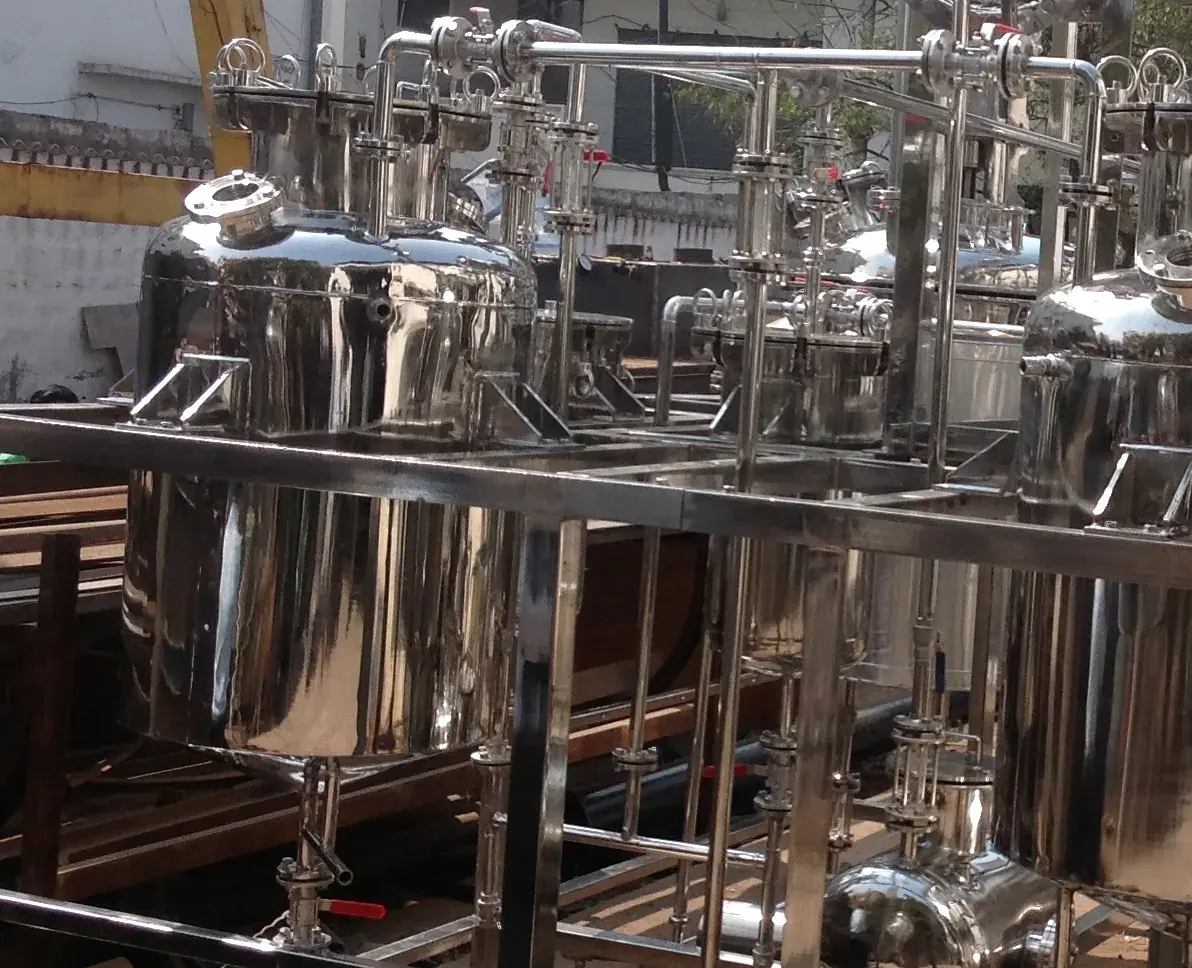
Mechotech designs and manufactures turnkey herbal extraction plants for Stevia rebaudiana, converting dried Stevia leaf into high-purity natural sweetener standardised to Stevioside 90% and Rebaudioside-A (Reb-A) 60%+. As a stevia extraction plant manufacturer, we supply the complete hot-water extraction, membrane filtration, ion-exchange purification, crystallisation and spray-drying line for the food, beverage, pharmaceutical, and nutraceutical industries. Candidate extraction technologies for steviol glycosides: Counter-Current Extraction (CCE), Ultrasound-Assisted Extraction (UAE), Hybrid Extraction and Microwave-Assisted Extraction (MAE) (4 in total).
Mechotech's Stevia rebaudiana plant is engineered around the real chemistry of stevia leaf: stevioside and Rebaudioside-A (Reb-A) are the two major, commercially significant steviol glycosides accumulated in the leaf, and both are recovered by food-grade hot-water extraction rather than an organic solvent — the correct route for a food-grade sweetener, since it leaves no solvent-residue concern for regulated food and beverage buyers. Ion-exchange resin purification then removes the bitter, colouring non-glycoside impurities that would otherwise carry into the finished sweetener, and controlled crystallisation isolates the sweet glycoside fraction to specification. Built in SS 316L with membrane filtration, crystallisation/spray-drying and PLC-SCADA automation, each plant is delivered as a commissioned turnkey system engineered to the declared Stevioside 90% and Rebaudioside-A 60%+ specification, with GMP hygienic design.
Technical Specifications
| Product | Stevia Rebaudiana Extraction & Purification Plant |
|---|---|
| Botanical Name | Stevia rebaudiana Bertoni |
| Feedstock | Stevia leaves |
| Part / Feed Form | Leaves |
| Target Extract | Steviol glycosides |
| Extract Type | Steviol glycoside extract / Rebaudioside-A powder |
| Standardisation | Stevioside 90%; Rebaudioside-A (Reb-A) 60%+, up to 98–99% for premium grade |
| Extraction Method | Counter-current, UAE, Hybrid, MAE |
| Technology Count | 4 |
| Extraction Conditions | Food-grade hot-water extraction (no organic solvent) |
| Product-contact Material | SS 304 / SS 316L, hygienic, CIP/SIP-cleanable |
| Filtration System | Pressure leaf filtration + cross-flow membrane filtration |
| Purification System | Food-grade ion-exchange resin columns + activated-carbon decolourisation |
| Concentration System | Multi-effect low-temperature vacuum evaporator |
| Crystallisation & Drying | Controlled crystallisation with centrifugation, and/or spray drying |
| Automation | Configurable — manual, semi-automatic or fully automatic PLC-SCADA (recipe-based) |
| Utility Requirements | Steam, chilled/cooling water, compressed air, soft & RO water, power (project-specific) |
| Compliance | GMP hygienic design; full documentation for qualification |
| Final Product Form | Free-flowing crystalline or spray-dried steviol glycoside powder |
| Plant Capacity | Reference project: 20 MT/day of stevia leaves (see the Stevia Extraction Plant case study) |
Plant Capacities
| Plant Scale | Raw Material Throughput | Typical Use |
|---|---|---|
| Pilot | Configured to your feedstock and trial plan | Product development, parameter validation |
| Semi-Commercial | Configured between pilot and commercial scale | Contract manufacturing, scale-up trials |
| Commercial | Reference project: 20 MT/day of stevia leaves | Commercial production at confirmed buyer volume |
The commercial figure is the reference project described in the Stevia Extraction Plant case study. Capacity is configured to raw-material supply and confirmed buyer volume; we recommend a pilot plant to validate process parameters before scaling.
Manufacturing Process
Each extraction method follows a different process — pick a method to see its steps.
Raw-Material Preparation
Stevia leaves are cleaned and size-reduced so steviol glycosides can be reached by the extraction medium; particle size and moisture are set during process development.
Counter-Current Loading
Prepared stevia leaves are fed into a multi-stage solid–liquid counter-current extractor where fresh ethanol/water or a suitable food-grade solvent meets the most-depleted material.
Counter-Current Extraction
Solvent flows against the solids across stages to draw out steviol glycosides; bed flow and fines management are verified during pilot work.
Extract (Miscella) Collection
The steviol glycosides-bearing miscella is collected from the fresh-feed end while spent solids are discharged from the solvent-entry end.
Concentration & Solvent Recovery
Solvent is removed from the clarified steviol glycosides-bearing extract under vacuum and returned through a solvent-recovery loop; recovery performance is confirmed at pilot scale.
Standardisation & Drying
The steviol glycosides extract is assayed against the declared target specification and dried or supplied as a concentrate, according to the requirement.
Raw-Material Preparation
Stevia leaves are cleaned and size-reduced so steviol glycosides can be reached by the extraction medium; particle size and moisture are set during process development.
Slurrying
Prepared stevia leaves are slurried with ethanol/water or water in the extraction vessel.
Ultrasonic Cavitation
Ultrasound creates cavitation that disrupts the plant matrix and speeds release of steviol glycosides; probe intensity, temperature and filtration behaviour are piloted.
Separation
Spent solids are separated by filtration or centrifugation and the extract is clarified before concentration.
Concentration & Solvent Recovery
Solvent is removed from the clarified steviol glycosides-bearing extract under vacuum and returned through a solvent-recovery loop; recovery performance is confirmed at pilot scale.
Standardisation & Drying
The steviol glycosides extract is assayed against the declared target specification and dried or supplied as a concentrate, according to the requirement.
Raw-Material Preparation
Stevia leaves are cleaned and size-reduced so steviol glycosides can be reached by the extraction medium; particle size and moisture are set during process development.
Stage Sequence Selection
A deliberate combined extraction train is used: the sequence of stages is selected for steviol glycosides in pilot screening and each stage is designed separately.
First Assisted Stage
The first stage releases steviol glycosides from the prepared feed under controlled conditions set for that stage.
Second / Combined Stage
The second stage completes recovery of steviol glycosides from the partially extracted material; stage conditions are optimised separately.
Separation & Concentration
Spent solids are removed and the combined extract is clarified and concentrated; solvent is recovered where a solvent is used.
Standardisation & Drying
The steviol glycosides extract is assayed against the declared target specification and dried or supplied as a concentrate, according to the requirement.
Raw-Material Preparation
Stevia leaves are cleaned and size-reduced so steviol glycosides can be reached by the extraction medium; particle size and moisture are set during process development.
Medium Mixing
Prepared stevia leaves are mixed with ethanol/water or water in the microwave extraction vessel.
Microwave Heating & Extraction
Controlled microwave heating drives steviol glycosides out of the prepared feed in a short cycle; heating, moisture, solvent safety and temperature-sensitive targets are controlled, with limits set during process development and pilot validation.
Separation
Spent solids are separated by filtration or centrifugation and the extract is clarified before concentration.
Concentration & Solvent Recovery
Solvent is removed from the clarified steviol glycosides-bearing extract under vacuum and returned through a solvent-recovery loop; recovery performance is confirmed at pilot scale.
Standardisation & Drying
The steviol glycosides extract is assayed against the declared target specification and dried or supplied as a concentrate, according to the requirement.
Major Plant Equipment
- Leaf cleaning system
- Hammer mill
- Stainless-steel hot-water extraction vessels
- Plate heat exchangers
- Pressure leaf filters
- Membrane filtration unit
- Ion exchange columns
- Activated carbon system
- Multi-effect vacuum evaporator
- Crystallisers
- Industrial centrifuges
- Spray dryer
- Ribbon blender
- Storage tanks
- CIP system
- PLC-SCADA automation panel
- Electrical MCC & instrumentation package
Plant Output
Case Study
Stevia Extraction Plant — Steviol Glycosides & Rebaudioside-A Turnkey Project
See how this plant was engineered and delivered for a real project.
Applications
- Carbonated and functional beverages
- Dairy products and dairy alternatives
- Confectionery and bakery products
- Tabletop natural sweeteners
- Pharmaceutical syrups and formulations
- Nutraceutical and functional food products
- Export to regulated-market food ingredient buyers
Key Features
Solvent-Free Hot-Water Extraction
Food-grade hot-water extraction recovers stevioside and Rebaudioside-A without organic solvent residue, simplifying regulatory compliance for food and beverage buyers.
Ion-Exchange Bitterness Reduction
Dedicated ion-exchange purification removes the non-glycoside impurities responsible for stevia's characteristic bitterness and aftertaste, delivering a cleaner sweetness profile — particularly important for the higher-value Reb-A fraction.
High-Purity Reb-A Capability
Membrane filtration, decolourisation and crystallisation stages are configured to reach premium Rebaudioside-A grades (98–99%) alongside standard Stevioside 90% output.
GMP Hygienic SS 316L Construction
Electropolished SS 316L product-contact surfaces use GMP hygienic design, with CIP/SIP operation between batches.
Flexible Crystallisation or Spray-Dried Output
The plant is configured for crystalline Reb-A, spray-dried steviol glycoside powder, or both, matching the customer's target product mix.
Frequently Asked Questions
Does Mechotech supply the complete machinery for Stevia rebaudiana?
What specification can the Stevia rebaudiana plant achieve?
Why does the process use hot-water extraction instead of solvent extraction?
Why does Rebaudioside-A command a premium over Stevioside?
Are newer steviol glycosides like Reb-M or Reb-D relevant to this plant?
What plant part of Stevia is used, and why?
What production capacities are available for the Stevia rebaudiana plant?
Which industries use the Stevia rebaudiana plant?
What does it cost to set up a Stevia extraction plant, and how is pricing determined?
Does leaf harvest timing affect the glycoside yield the plant can recover?
What is a stevia leaf extraction plant for steviol glycosides?
Which plant part or feed form does the stevia leaf plant process?
Which extraction technologies are suitable for stevia leaves?
How does the stevia leaf extraction process work?
What equipment does the stevia leaf extraction plant include?
Which related Mechotech extraction pages cover the same material or target?
Do steviol glycosides have specific regulatory purity requirements buyers should know about?
Ready to discuss your project?
Get a free quote and technical consultation from our engineering team.