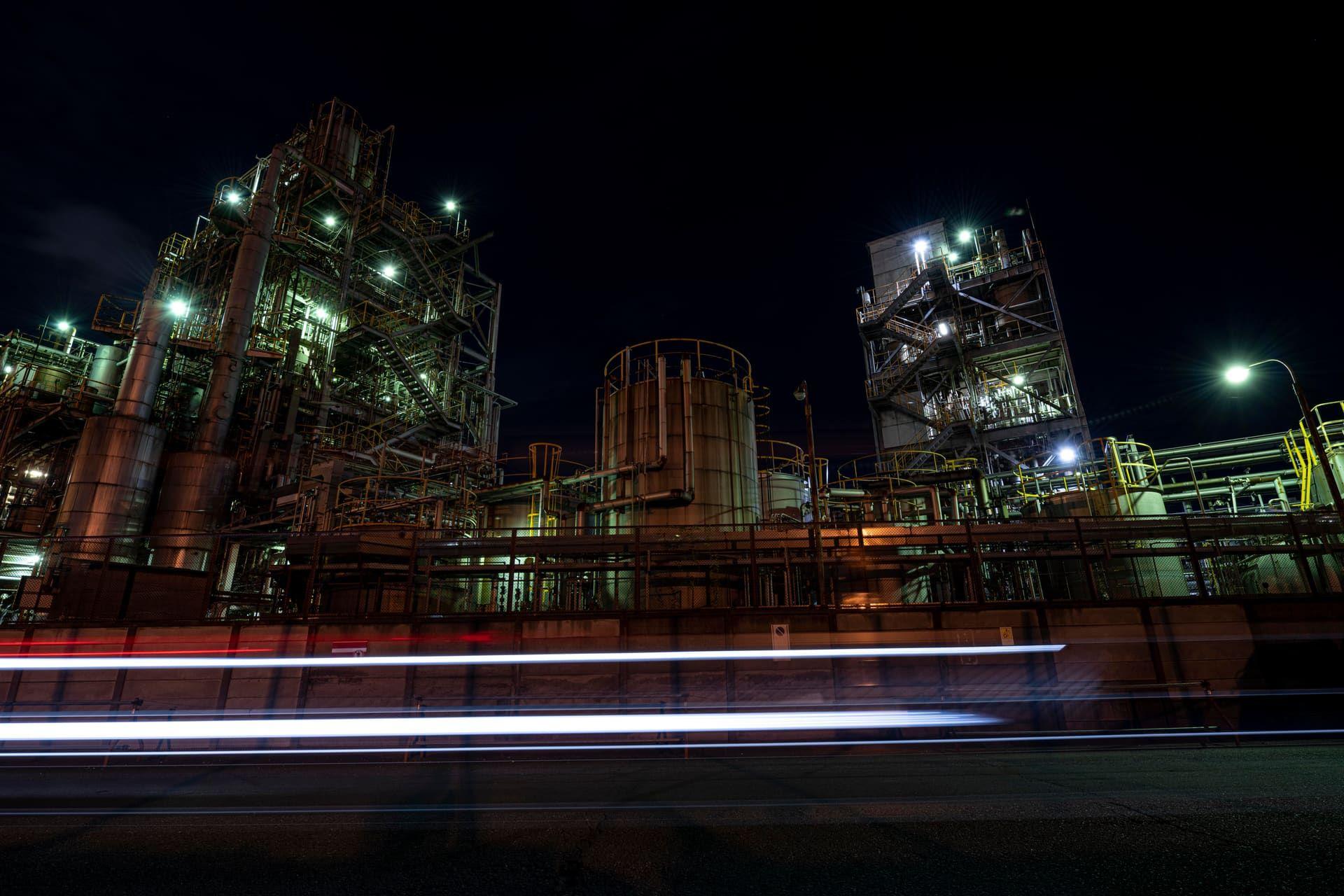
Aloe Vera Extraction Plant
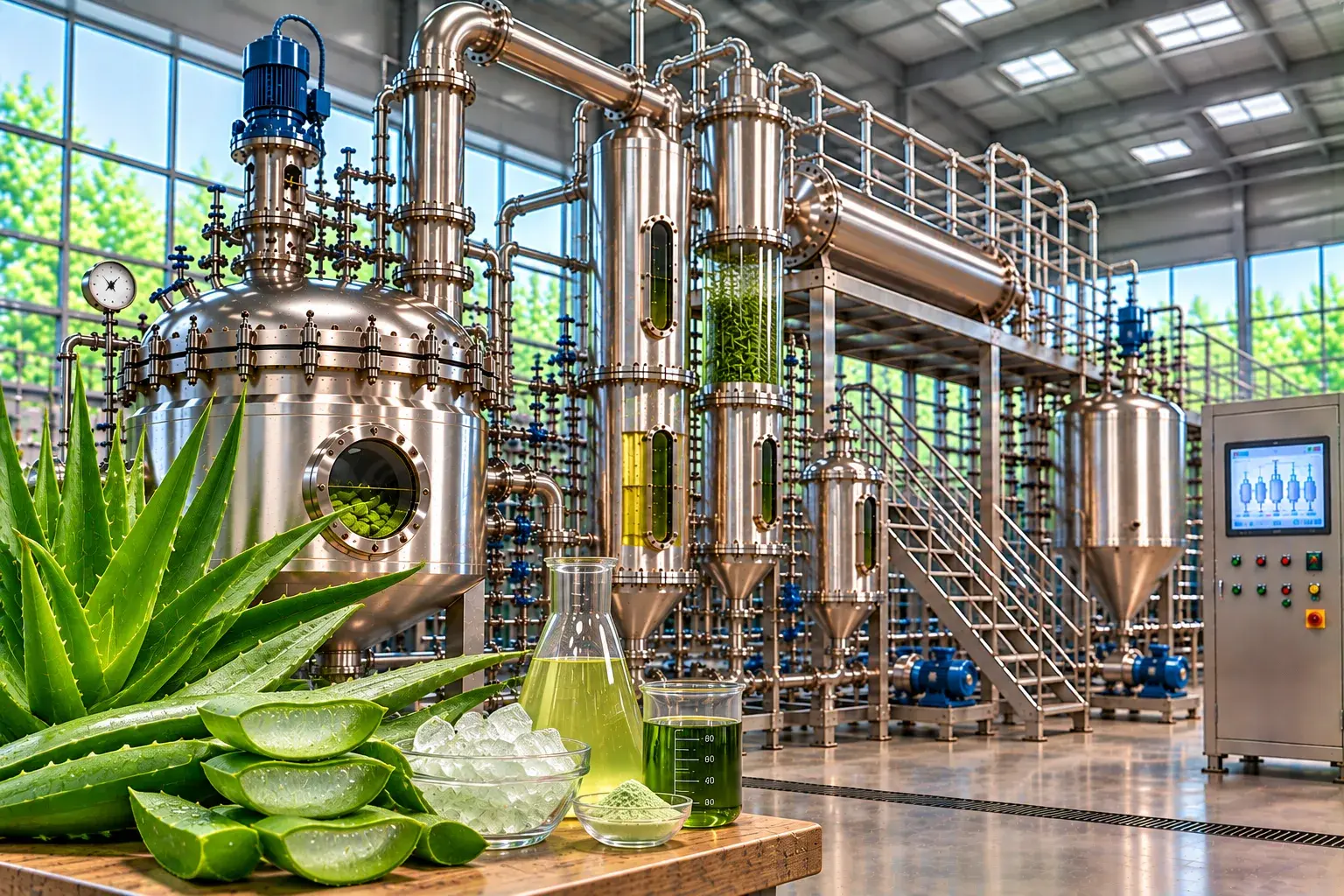
Aloe Vera Extraction Plant
Purity Levels
Up to 200:1 (200X) concentrated powder; gel & juice to customer specification
Extraction Technologies
Mechotech designs and manufactures turnkey Aloe Vera extraction and processing plants that convert fresh Aloe Vera leaves (Aloe barbadensis Miller) into stabilised gel, juice, concentrate and spray- or freeze-dried powder. We supply the complete line — leaf washing, filleting, gel extraction, Aloin decolourisation, filtration, pasteurisation, concentration and drying — for the nutraceutical, pharmaceutical, cosmetic, personal-care, food and beverage industries. Candidate extraction technologies for acemannan: Subcritical Water Extraction (SWE) and Enzyme-Assisted Extraction (EAE) (2 in total).
Mechotech's Aloe Vera plant is engineered around the real processing chemistry of aloe: mechanical filleting and cold gel extraction preserve natural bioactives such as acemannan, while food-grade adsorption removes Aloin (yellow latex) for a clear, stable, export-grade extract. Built in hygienic SS 304 / SS 316L with CIP, PLC-SCADA automation and full documentation, each plant is delivered as a commissioned turnkey system with a hygienic, CIP-cleanable design and documentation to support the customer's own GMP and food-safety qualification, with capacity and automation configured to the customer's requirement.
Technical Specifications
| Product | Aloe Vera Extraction & Processing Plant |
|---|---|
| Botanical Name | Aloe barbadensis Miller |
| Feedstock | Aloe vera inner leaf |
| Part / Feed Form | Inner leaf (gel fillet) |
| Target Extract | Acemannan |
| Extract Type | Gel, juice, concentrate and spray/freeze-dried powder |
| Standardisation | Up to 200:1 (200X) concentrated powder; gel/juice to customer specification |
| Extraction Method | SWE, EAE |
| Technology Count | 2 |
| Extraction Conditions | Mechanical filleting & cold gel extraction (oxidation-minimised) |
| Decolourisation | Food-grade adsorption for Aloin (yellow-latex) removal |
| Product-contact Material | SS 304 / SS 316L, CIP-cleanable |
| Filtration System | Multi-stage filtration |
| Concentration System | Low-temperature vacuum evaporator (optional) |
| Drying System | Spray dryer / freeze dryer (optional) |
| Automation | Configurable — manual, semi-automatic or fully automatic PLC-SCADA (recipe-based) |
| Plant Capacity | Configured to requirement — pilot to 20,000+ kg fresh leaves/day |
| Utility Requirements | Steam, chilled/cooling water, compressed air, soft & purified water, power (project-specific) |
| Compliance | GMP hygienic design; full documentation for qualification |
| Final Product Form | Liquid (gel/juice), concentrate, or free-flowing powder |
Plant Capacities
| Plant Scale | Raw Material Throughput | Typical Use |
|---|---|---|
| Pilot | Configured to your feedstock and trial plan | Product development, parameter validation |
| Semi-Commercial | Configured between pilot and commercial scale | Contract manufacturing, scale-up trials |
| Commercial | 20,000+ kg fresh leaves/day | Commercial production at confirmed buyer volume |
Capacity is configured to raw-material supply and confirmed buyer volume; we recommend a pilot plant to validate process parameters before scaling.
Manufacturing Process
Each extraction method follows a different process — pick a method to see its steps.
Raw-Material Preparation
Aloe vera inner leaf is cleaned and size-reduced (with the inner leaf separated and washed) so acemannan can be reached by the extraction medium; particle size and moisture are set during process development.
Vessel Loading & Pressurisation
Prepared Aloe vera inner leaf and water are loaded into a pressure-rated extraction vessel.
Subcritical Water Extraction
Water held liquid under pressure at elevated temperature extracts acemannan without an organic solvent; temperature and residence time are set to limit thermal degradation and hydrolysis.
Separation
Spent inner leaf are separated by filtration or centrifugation and the extract is clarified before concentration.
Concentration
The clarified aqueous extract is concentrated under vacuum or by membrane systems where required; no organic solvent is used in this route.
Recovery, Standardisation & Drying
The acemannan fraction is recovered from the concentrate by a route selected during process development and checked against the target specification; drying behaviour is verified because polysaccharide-type targets can be heat-sensitive.
Raw-Material Preparation
Aloe vera inner leaf is cleaned and size-reduced (with the inner leaf separated and washed) so acemannan can be reached by the extraction medium; particle size and moisture are set during process development.
Slurry & pH Control
Prepared Aloe vera inner leaf is slurried in water with pH and temperature set for the enzyme system.
Enzymatic Treatment
An enzyme (for example a cellulase, pectinase or protease, selected for the inner leaf matrix) breaks down bound cell-wall material to release acemannan; enzyme cost and specificity are validated at pilot scale.
Enzyme Inactivation & Separation
The enzyme is inactivated and spent solids are separated by filtration or centrifugation.
Concentration
The clarified aqueous extract is concentrated under vacuum or by membrane systems where required; no organic solvent is used in this route.
Recovery, Standardisation & Drying
The acemannan fraction is recovered from the concentrate by a route selected during process development and checked against the target specification; drying behaviour is verified because polysaccharide-type targets can be heat-sensitive.
Major Plant Equipment
- Leaf washing conveyor & bubble washer
- Sorting and trimming stations
- Filleting machine (gel/rind separation)
- Gel extraction system
- Stainless-steel collection tanks
- Decolourisation columns (Aloin removal)
- Multi-stage filtration system
- Plate heat exchanger & pasteuriser
- Low-temperature vacuum evaporator
- Spray dryer / freeze dryer
- Storage tanks & aseptic filling system
- CIP (clean-in-place) system
- PLC-SCADA automation, electrical MCC & instrumentation
Plant Output
Case Study
Aloe Vera Extraction Plant — Turnkey Gel, Juice & Powder Project
See how this plant was engineered and delivered for a real project.
Applications
- Nutraceuticals and health supplements
- Functional and beverage-grade drinks
- Cosmetics and personal-care actives
- Pharmaceutical formulations
- Food processing and ingredients
- Export-grade ingredient supply
Key Features
Automated Filleting & Gel Recovery
Automated or semi-automatic filleting separates the inner gel from the rind, maximising gel yield while minimising Aloin (yellow-latex) contamination.
Decolourisation & Aloin Removal
Food-grade adsorption removes Aloin and pigments to deliver a clear, stabilised, export-grade aloe extract for regulated markets.
Hygienic SS 304 / SS 316L Construction
CIP-cleanable stainless-steel product-contact surfaces for hygienic operation, with documentation to support the customer's own GMP and food-safety qualification.
PLC-SCADA Recipe Automation
Recipe-based control with pasteurisation validation, batch traceability and production reporting; configurable from manual to fully automatic.
Gel, Juice, Concentrate & Powder in One Line
Matched concentration, spray and freeze drying let a single plant produce liquid gel/juice, concentrate and standardised powder (up to 200:1 / 200X).
Frequently Asked Questions
What is an Aloe Vera extraction plant?
What products can an Aloe Vera plant produce?
What extraction method is used for Aloe Vera?
What is the capacity, and can the plant be customised?
What is the plant built from, and how does it support compliance?
Does Mechotech provide turnkey installation and automation?
Which extraction technologies are candidates for Aloe vera inner leaf?
Is a pilot trial recommended for Aloe vera inner leaf extraction?
Which feedstock and target extract does the Aloe Vera plant cover?
How does the Aloe Vera extraction process work?
What equipment does the Aloe Vera extraction plant include?
Ready to discuss your project?
Get a free quote and technical consultation from our engineering team.