Ocimum Sanctum Tulsi Extract
Ocimum Sanctum Tulsi Extract
Purity Levels
2.5% to 60% Ursolic acids by HPLC
Extraction Technologies
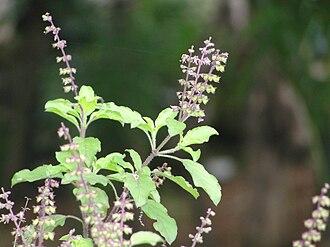
Mechotech designs and manufactures turnkey herbal extraction plants for Ocimum Sanctum Tulsi Extract — the standardised, solvent-extracted powder form of Tulsi (Holy Basil), distinct from steam-distilled Tulsi essential oil — standardised to 2.5% to 60% Ursolic acids by HPLC. As a tulsi extraction plant manufacturer, we supply the complete hydro-alcoholic extraction, purification, and spray-drying line that converts Tulsi (Ocimum tenuiflorum) leaf into a consistent extract powder rich in ursolic acid, eugenol and rosmarinic acid for the pharmaceutical, nutraceutical, food, and cosmetic industries. Candidate extraction technologies for eugenol and phenolics, and eugenol-rich oil: Counter-Current Extraction (CCE), Supercritical CO₂ Extraction (SCFE), Ultrasound-Assisted Extraction (UAE), Hybrid Extraction and Microwave-Assisted Extraction (MAE) (5 in total).
Mechotech's Ocimum Sanctum Tulsi Extract plant is engineered around the real phytochemistry of Tulsi leaf: hydro-alcoholic extraction recovers the key adaptogenic actives — ursolic acid, eugenol and rosmarinic acid — while membrane clarification and closed-loop solvent recovery protect both product purity and process economics. Built in SS 316L with integrated solvent recovery, PLC-SCADA automation and full documentation, each plant is delivered as a commissioned turnkey system configured to meet the 2.5% to 60% Ursolic acids by HPLC specification, to GMP, AYUSH and HACCP standards.
Technical Specifications
| Product | Ocimum Sanctum Tulsi Extract Plant |
|---|---|
| Botanical Name | Ocimum tenuiflorum (syn. Ocimum sanctum) |
| Feedstock | Holy basil leaves |
| Part / Feed Form | Leaves |
| Target Extract | Eugenol and phenolics; eugenol-rich oil |
| Extract Type | Standardised hydro-alcoholic extract, spray/vacuum-dried powder |
| Standardisation | 2.5% to 60% Ursolic acids by HPLC; Eugenol and Rosmarinic acid also assayed |
| Extraction Method | Counter-current, CO2, UAE, Hybrid, MAE |
| Technology Count | 5 |
| Extraction Conditions | Hydro-alcoholic extraction |
| Product-contact Material | SS 316L, electropolished, CIP/SIP-cleanable |
| Filtration System | Pressure leaf filters with membrane (UF/MF) clarification |
| Concentration System | Vacuum evaporator |
| Drying System | Spray dryer / vacuum dryer |
| Automation | Configurable — manual, semi-automatic or fully automatic PLC-SCADA (recipe-based) |
| Utility Requirements | Steam, chilled/cooling water, compressed air, nitrogen, soft & RO water, power (project-specific) |
| Compliance | GMP hygienic design; full documentation for qualification |
| Final Product Form | Free-flowing standardised extract powder (with optional co-recovered essential oil) |
| Plant Capacity | Reference project: 20 MT/day of Tulsi leaves (see the Tulsi (Holy Basil) Extraction Plant case study) |
Plant Capacities
| Plant Scale | Raw Material Throughput | Typical Use |
|---|---|---|
| Pilot | Configured to your feedstock and trial plan | Product development, parameter validation |
| Semi-Commercial | Configured between pilot and commercial scale | Contract manufacturing, scale-up trials |
| Commercial | Reference project: 20 MT/day of Tulsi leaves | Commercial production at confirmed buyer volume |
The commercial figure is the reference project described in the Tulsi (Holy Basil) Extraction Plant case study. Capacity is configured to raw-material supply and confirmed buyer volume; we recommend a pilot plant to validate process parameters before scaling.
Manufacturing Process
Each extraction method follows a different process — pick a method to see its steps.
Raw-Material Preparation
Holy basil leaves are cleaned and size-reduced so eugenol and phenolics can be reached by the extraction medium; particle size and moisture are set during process development.
Counter-Current Loading
Prepared holy basil leaves are fed into a multi-stage solid–liquid counter-current extractor where fresh ethanol/water or a suitable food-grade solvent meets the most-depleted material.
Counter-Current Extraction
Solvent flows against the solids across stages to draw out eugenol and phenolics; bed flow and fines management are verified during pilot work.
Extract (Miscella) Collection
The eugenol and phenolics-bearing miscella is collected from the fresh-feed end while spent solids are discharged from the solvent-entry end.
Concentration & Solvent Recovery
Solvent is removed from the clarified eugenol and phenolics-bearing extract under vacuum and returned through a solvent-recovery loop; recovery performance is confirmed at pilot scale.
Standardisation & Drying
The eugenol and phenolics extract is assayed against the declared target specification and dried or supplied as a concentrate, according to the requirement.
Raw-Material Conditioning
Holy basil leaves are cleaned and conditioned so eugenol-rich oil is accessible to supercritical CO₂; moisture and particle size are set during process development.
Extraction Vessel Loading
Conditioned holy basil leaves are charged into the high-pressure extraction vessel.
Supercritical CO₂ Extraction
Supercritical CO₂ passes through the charge and dissolves eugenol-rich oil; an ethanol modifier can be evaluated where polar fractions are also required, and operating pressure and temperature are set in process development.
Separator Collection
Pressure is reduced in separator stages so the extracted eugenol-rich oil drops out of the CO₂ and is collected.
CO₂ Recycle
Gaseous CO₂ is re-liquefied and recirculated to the extractor, limiting make-up gas demand.
Finishing & Packing
The collected eugenol-rich oil is polished by filtration as needed and packed to the required specification.
Raw-Material Preparation
Holy basil leaves are cleaned and size-reduced so eugenol and phenolics can be reached by the extraction medium; particle size and moisture are set during process development.
Slurrying
Prepared holy basil leaves are slurried with ethanol/water or water in the extraction vessel.
Ultrasonic Cavitation
Ultrasound creates cavitation that disrupts the plant matrix and speeds release of eugenol and phenolics; probe intensity, temperature and filtration behaviour are piloted.
Separation
Spent solids are separated by filtration or centrifugation and the extract is clarified before concentration.
Concentration & Solvent Recovery
Solvent is removed from the clarified eugenol and phenolics-bearing extract under vacuum and returned through a solvent-recovery loop; recovery performance is confirmed at pilot scale.
Standardisation & Drying
The eugenol and phenolics extract is assayed against the declared target specification and dried or supplied as a concentrate, according to the requirement.
Raw-Material Preparation
Holy basil leaves are cleaned and size-reduced so eugenol and phenolics can be reached by the extraction medium; particle size and moisture are set during process development.
Stage Sequence Selection
A deliberate combined extraction train is used: the sequence of stages is selected for eugenol and phenolics in pilot screening and each stage is designed separately.
First Assisted Stage
The first stage releases eugenol and phenolics from the prepared feed under controlled conditions set for that stage.
Second / Combined Stage
The second stage completes recovery of eugenol and phenolics from the partially extracted material; stage conditions are optimised separately.
Separation & Concentration
Spent solids are removed and the combined extract is clarified and concentrated; solvent is recovered where a solvent is used.
Standardisation & Drying
The eugenol and phenolics extract is assayed against the declared target specification and dried or supplied as a concentrate, according to the requirement.
Raw-Material Preparation
Holy basil leaves are cleaned and size-reduced so eugenol and phenolics can be reached by the extraction medium; particle size and moisture are set during process development.
Medium Mixing
Prepared holy basil leaves are mixed with ethanol/water or water in the microwave extraction vessel.
Microwave Heating & Extraction
Controlled microwave heating drives eugenol and phenolics out of the prepared feed in a short cycle; heating, moisture, solvent safety and temperature-sensitive targets are controlled, with limits set during process development and pilot validation.
Separation
Spent solids are separated by filtration or centrifugation and the extract is clarified before concentration.
Concentration & Solvent Recovery
Solvent is removed from the clarified eugenol and phenolics-bearing extract under vacuum and returned through a solvent-recovery loop; recovery performance is confirmed at pilot scale.
Standardisation & Drying
The eugenol and phenolics extract is assayed against the declared target specification and dried or supplied as a concentrate, according to the requirement.
Major Plant Equipment
- Leaf washing system
- Cutter & size-reduction system
- Stainless-steel jacketed extraction vessels
- Pressure leaf filters
- Vacuum evaporators
- Solvent recovery system
- Membrane (UF/MF) filtration system
- Purification/standardisation columns
- Spray dryer
- Ribbon blender
- Product storage silos
- PLC-SCADA automation panel
- Electrical MCC & instrumentation package
- CIP/SIP system
Plant Output
Case Study
Tulsi (Holy Basil) Extraction Plant — Ursolic Acid & Eugenol Standardised Extract
See how this plant was engineered and delivered for a real project.
Applications
- Adaptogenic nutraceutical capsule and tablet formulations
- Ayurvedic and traditional (AYUSH-aligned) medicine preparations
- Pharmaceutical standardised ingredient supply
- Food, flavour, and beverage applications
- Cosmetic and personal care active ingredients
- Export to regulated-market ingredient buyers
Key Features
GMP Hygienic SS 316L Construction
Electropolished SS 316L product-contact surfaces use GMP hygienic design, with CIP operation between batches.
Closed-Loop Solvent Recovery
Integrated recovery returns solvent per batch for reuse.
Standardised to Specification
In-process and batch-release assay are used to check the finished Ocimum Sanctum Tulsi Extract extract against its declared specification (2.5% to 60% Ursolic acids by HPLC).
Integrated Drying
A matched spray/vacuum dryer produces a free-flowing, low-moisture powder ready for encapsulation and blending.
Scalable Batch Capacity
Plants are configured to raw-material supply and confirmed buyer volume; the reference project processes 20 MT/day of Tulsi leaves.
Frequently Asked Questions
Does Mechotech supply the complete machinery for Ocimum Sanctum Tulsi Extract?
What specification can the Ocimum Sanctum Tulsi Extract plant achieve?
What production capacities are available for the Ocimum Sanctum Tulsi Extract plant?
Which industries use the Ocimum Sanctum Tulsi Extract plant?
For tulsi essential oil rather than extract powder, does Mechotech offer a separate plant?
What is a holy basil leaf extraction plant for eugenol and phenolics, and eugenol-rich oil?
Which plant part or feed form does the holy basil leaf plant process?
Which extraction technologies are suitable for holy basil leaves?
Why do the candidate technologies target eugenol and phenolics, and eugenol-rich oil when the specification on this page is 2.5% to 60% ursolic acids by HPLC?
How does the holy basil leaf extraction process work?
What equipment does the holy basil leaf extraction plant include?
Which related Mechotech extraction pages cover the same material or target?
How much solvent is recovered and reused during Tulsi extraction?
Ready to discuss your project?
Get a free quote and technical consultation from our engineering team.